



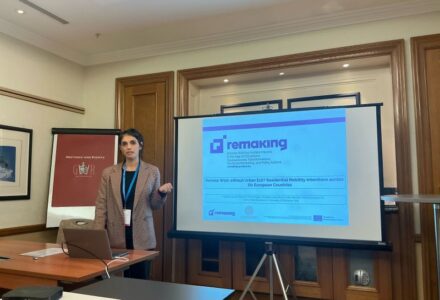
REMAKING shares research at the 2026 RSA Regional Futures Conference in London
REMAKING took part in the 2026 Regional Futures Conference, organised by the Regional Studies Association (RSA), held in London on 12–13 November…
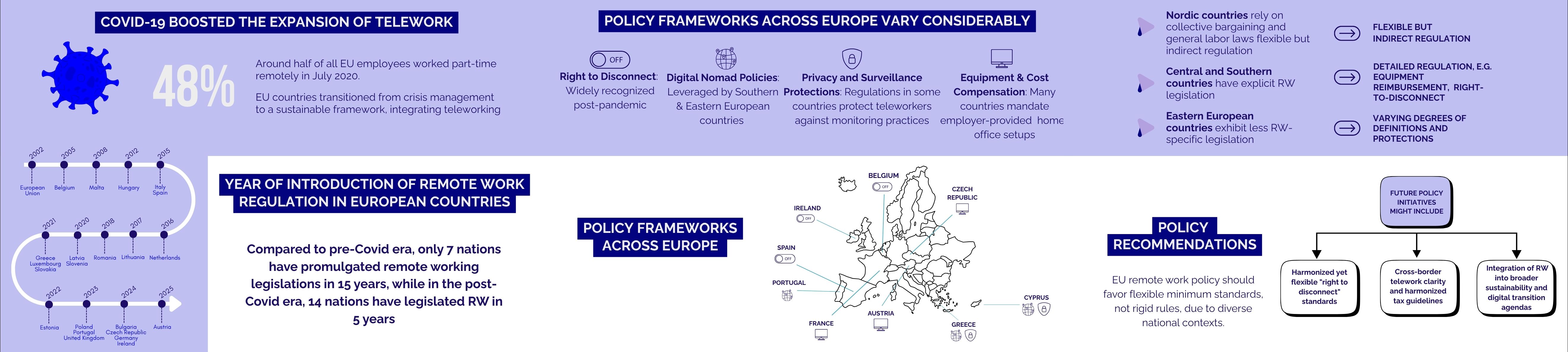
REMAKING examines the positive and negative effects of remote working on individuals, within companies or organisations and in the socio-economic sphere.
Case Studies Highlights
Explore key findings from five case studies examining the diverse impacts of remote working across Europe. Click on each image to discover more research highlights and conclusions.
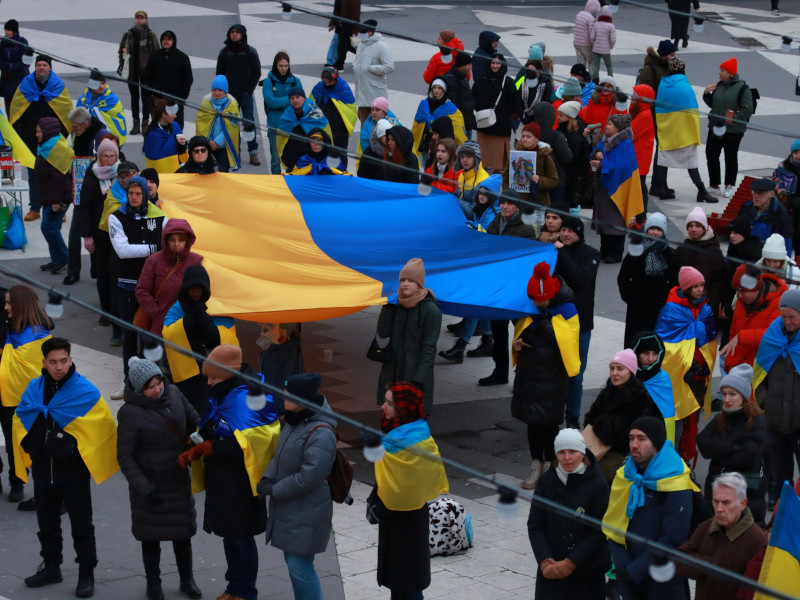
Remote work helps displaced Ukrainians maintain employment and professional identity, but also brings economic insecurity and challenges for integration into local labour markets.
Digital nomadism creates opportunities for entrepreneurship and local connections, but also increases housing pressures, touristification and employment precarity.
Remote and hybrid work improve wellbeing, reduce commuting and strengthen local community engagement, creating new opportunities for urban and rural territories.
Hybrid work helps retain skilled professionals, reduces commuting and supports regional economies, although its benefits depend on adequate infrastructure and organisational policies.
Corporate remote work is reshaping salaried employment, offering greater autonomy and flexibility while introducing new pressures, digital control and territorial challenges.
REMAKING took part in the 2026 Regional Futures Conference, organised by the Regional Studies Association (RSA), held in London on 12–13 November…
On 13 November 2026, REMAKING researchers from the Prague University of Economics and Business (VŠE) organised an online policy workshop to share…
The European research project REMAKING continues to expand its media visibility, with its findings featured in Corriere della Sera, one of Italy’s…
Findings from the REMAKING case study on enforced remote workers have been featured on the blog of the Leibniz Lab “Disruptions and…