REMAKING Research Presented at Sorbonne Seminar on Displaced Remote Workers
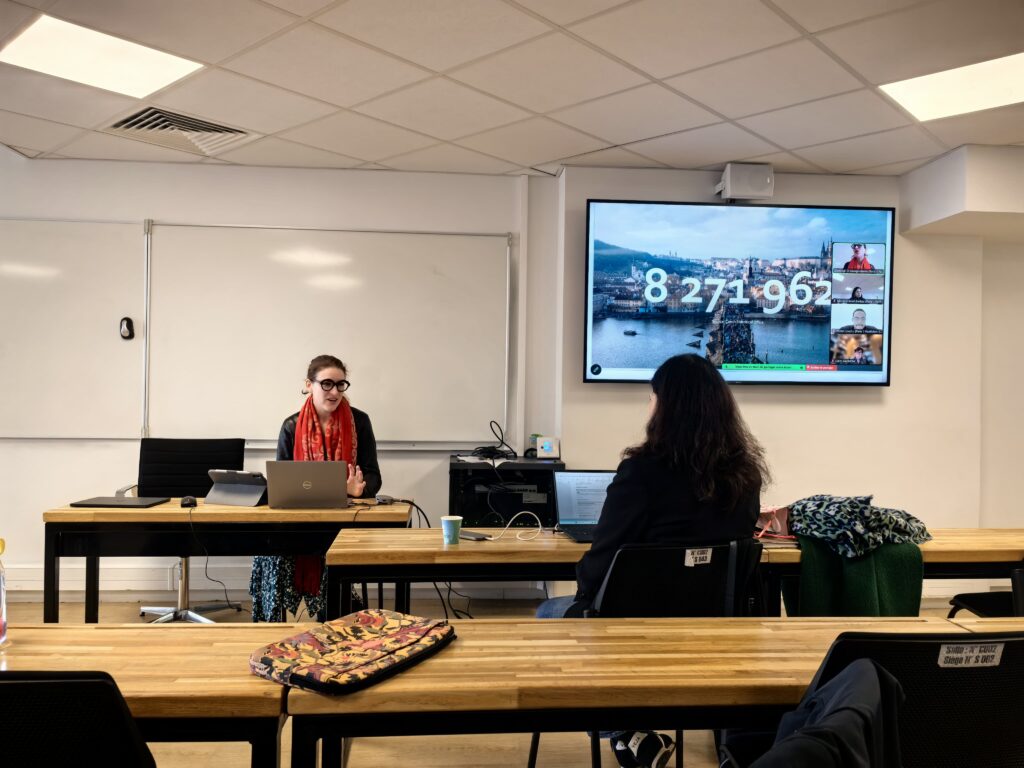
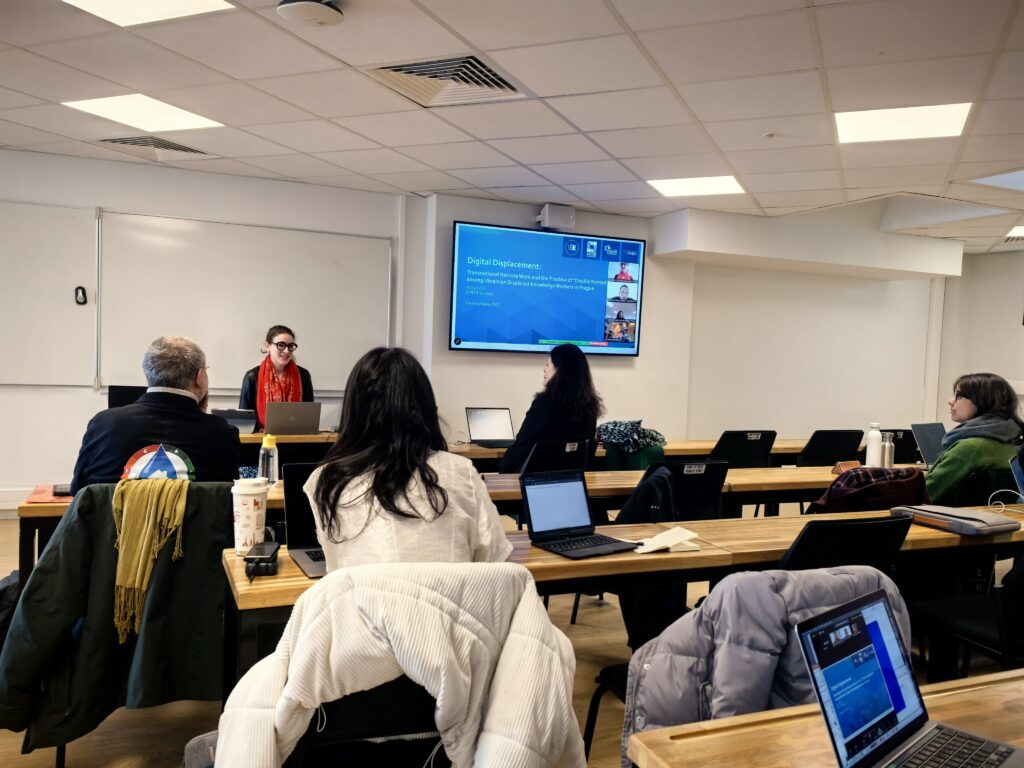
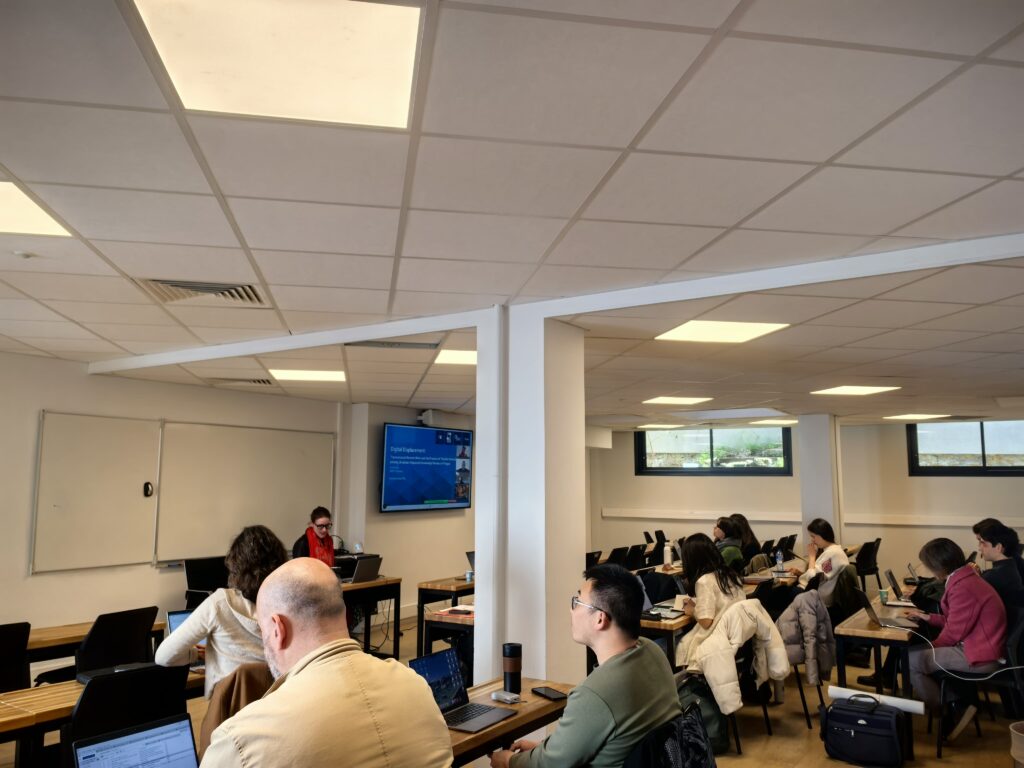
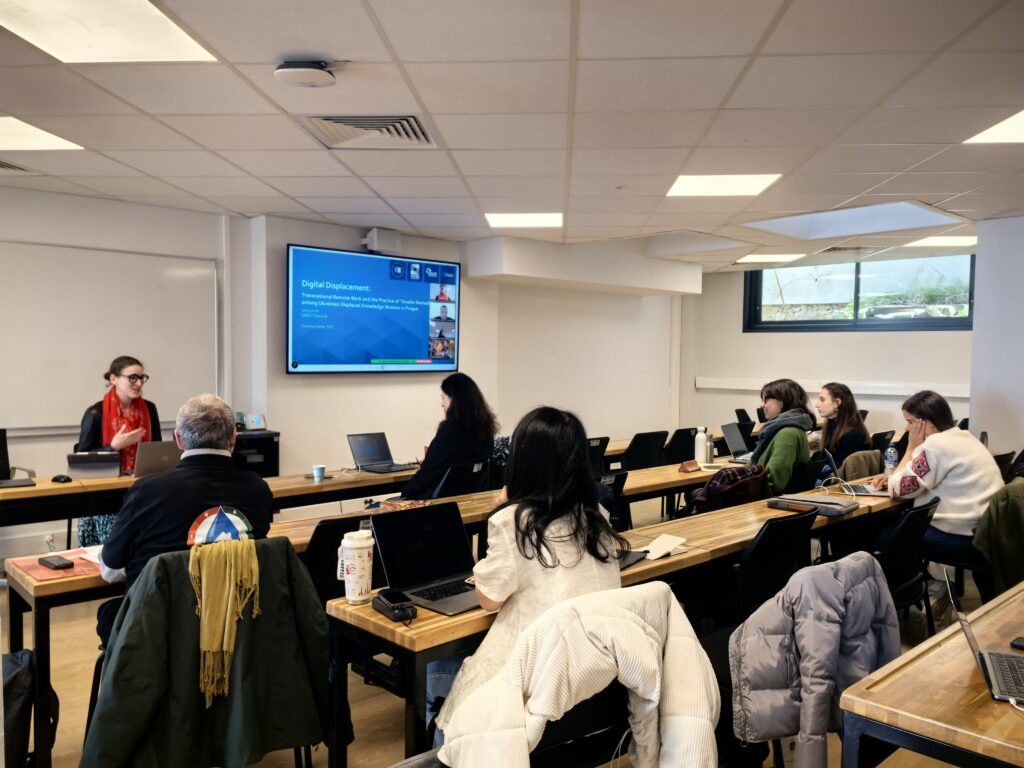
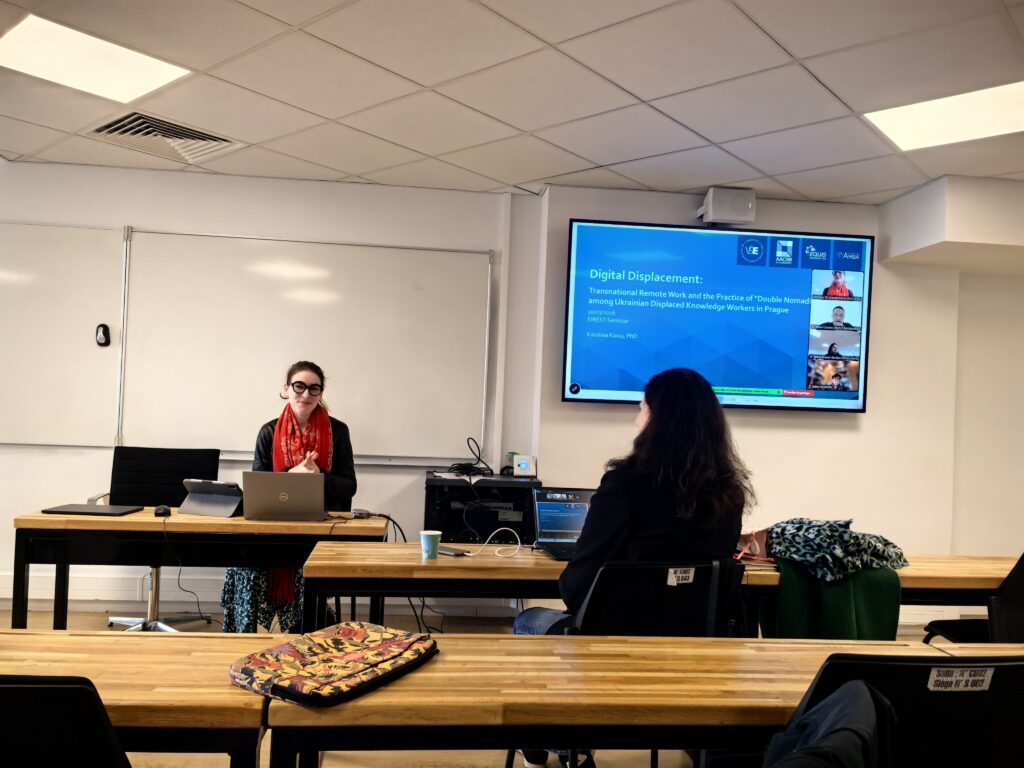
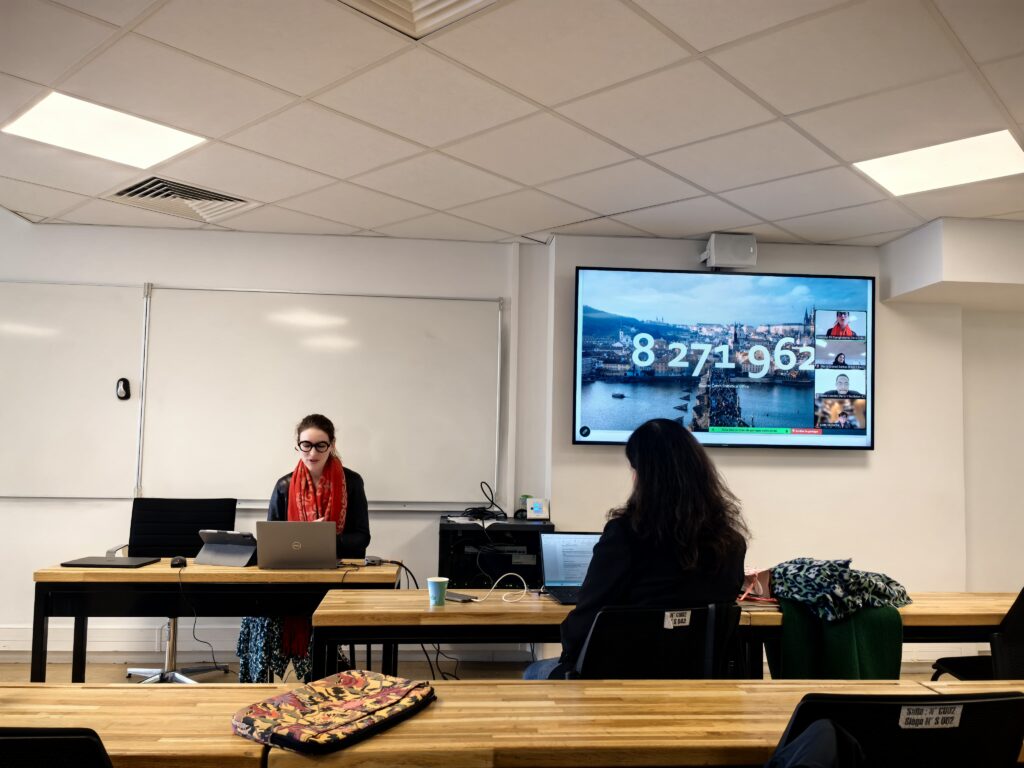
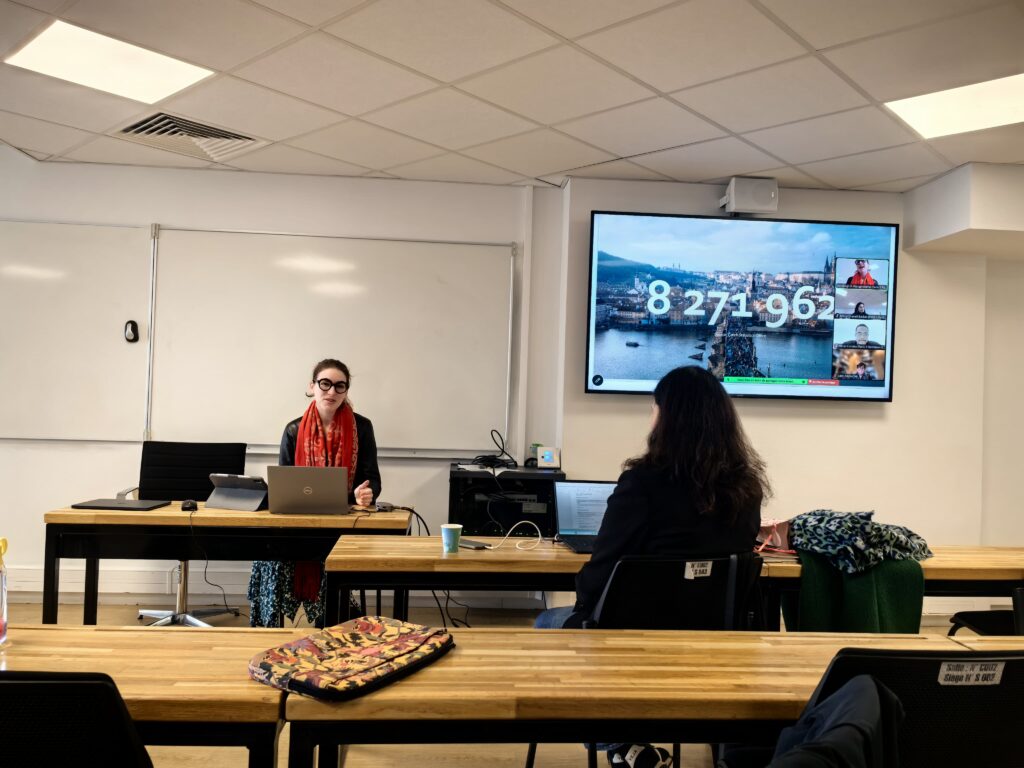
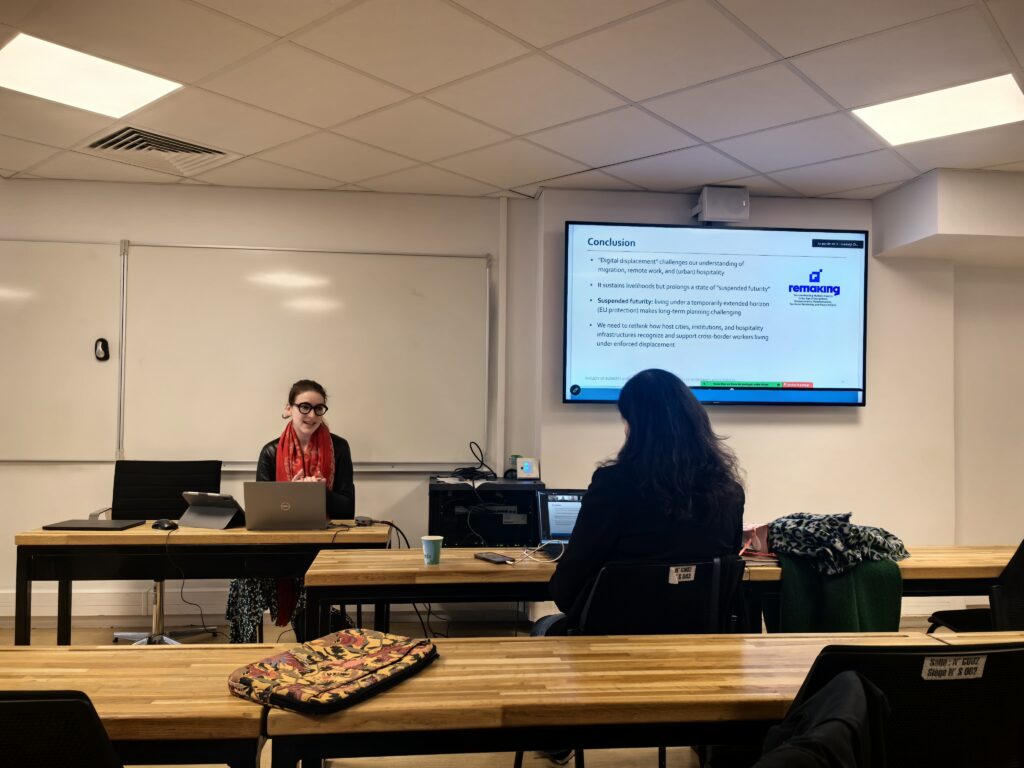
At a recent seminar hosted by Sorbonne University under the EIREST network, Karolina Kania from The Prague University of Economics and Business (VŠE) presented new research findings from the Enforced migration workers Case Study from the REMAKING Project, shedding light on the lived realities of Ukrainian displaced knowledge workers engaged in remote work.
Titled “Digital Displacement: Transnational Remote Work and the Practice of ‘Double Nomadism’ among Ukrainian Displaced Knowledge Workers in Prague,” the presentation addressed an audience of tourism geographers by challenging dominant narratives of “digital nomadism.” Kania contrasted Prague’s global image as a desirable destination for privileged remote workers with the constrained and precarious conditions faced by Ukrainian refugees.
Central to the presentation was the concept of “double nomadism,” describing how displaced Ukrainian professionals navigate dual instability: fleeing physical violence while living under temporary protection in Czechia, and simultaneously maintaining economic and professional ties to Ukraine or international clients through remote work.
The intervention drew entirely on ongoing research within the REMAKING project, part of the Horizon Europe framework. Kania introduced the project’s broader analytical lens, which examines how remote work reshapes socio-territorial dynamics, particularly under the pressure of external shocks such as the war in Ukraine.
Empirical insights were drawn from REMAKING Enforced migration workers Case Study, which is being conducted by VSE, IRS and KNU, based on qualitative research conducted in the Czech Republic. The study includes 37 in-depth interviews with displaced remote workers and 17 problem-centred interviews with key stakeholders. These findings reveal the tangible challenges of so-called “placeless” work, including the strain of maintaining professional boundaries in overcrowded living spaces and the necessity of improvising work environments across cafés, libraries, and even public transport.
The presentation concluded by emphasizing REMAKING’s commitment to generating practical, place-based policy solutions. By highlighting gaps in current urban hospitality systems and institutional frameworks, Kania underscored the need for better recognition and protection of vulnerable, cross-border remote workers navigating displacement and digital labour simultaneously.