REMAKING research at the 17th ESA Conference in Warsaw
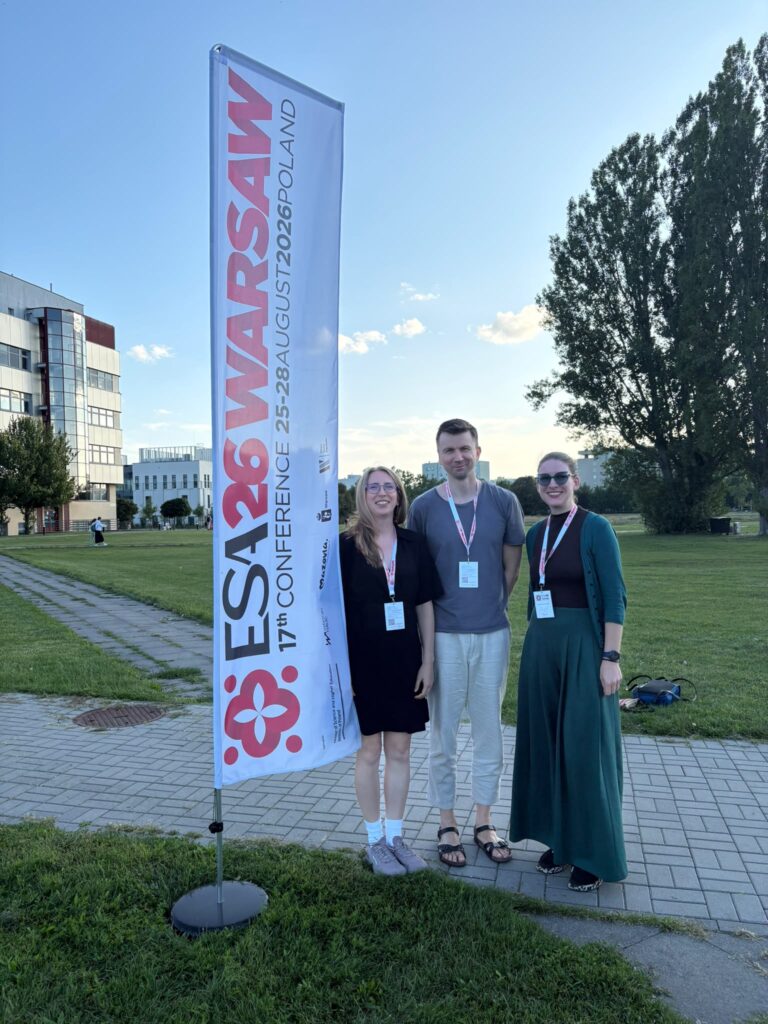
From 25 to 28 August 2026, Warsaw hosted the 17th Conference of the European Sociological Association (ESA), one of the largest gatherings of sociologists and social scientists in Europe. Under the theme “Strengthening Democracies: Social Action, Solidarity, and Sustainable Futures”, the four-day conference brought together researchers from across Europe and beyond for plenary and semi-plenary sessions, Research Networks, Research Streams and other scientific exchanges.
The REMAKING team from the Prague University of Economics and Business (VŠE) participated in the conference with Ivana Lukeš Rybanská, Karolina Kania and Petr Mezihorák, bringing findings from the project’s research on the experiences of Ukrainian displaced people and remote workers into the wider European sociological debate.
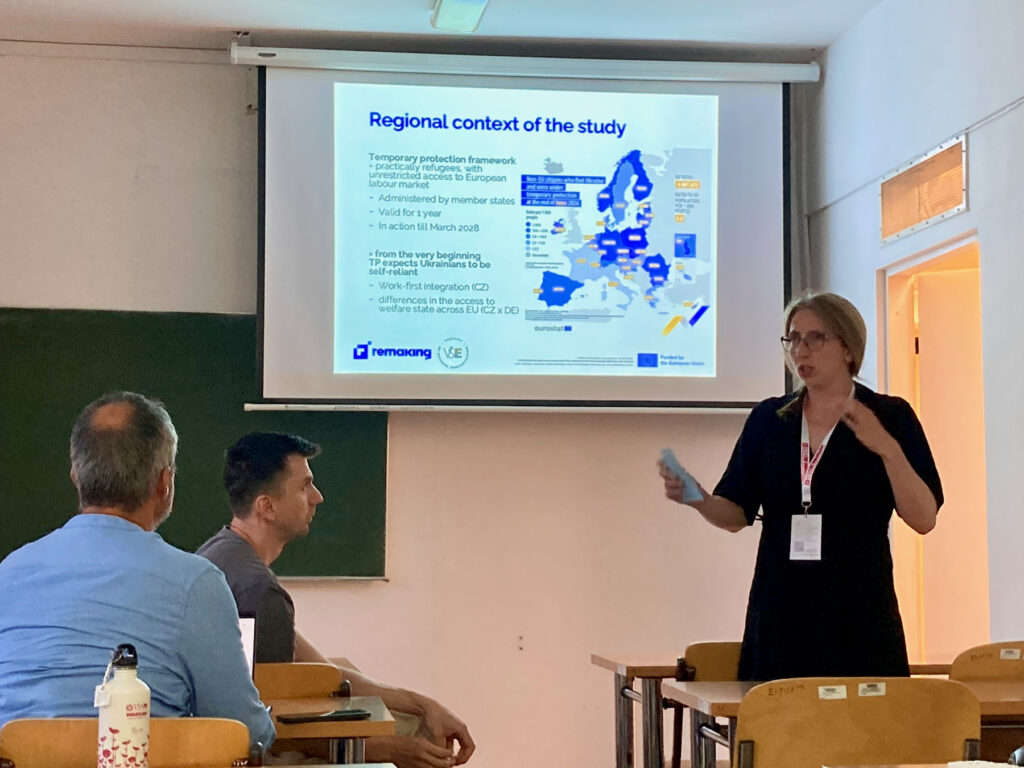
Their contribution focused on the context created by the EU Temporary Protection framework for people fleeing the war in Ukraine and on how different national approaches shape their labour-market participation, social integration and everyday experiences. The presentation highlighted that Temporary Protection provides Ukrainians with broad access to the European labour market, while its practical implementation is administered by individual Member States. In this context, the research examined differences between national systems, including the stronger work-first approach to integration in Czechia and variations in access to welfare support across European countries.
The presentation was based on extensive qualitative fieldwork carried out in Czechia, Germany and Ukraine between February and November 2025. According to the methodology presented in Warsaw, the research included 110 interviews, comprising 85 interviews with remote workers and 25 contextual interviews. The study covered 55 interviews in Czechia, 39 in Germany and 17 in Ukraine, with interviews conducted in Ukrainian, Czech, English and Russian and complemented by observations in different institutional and community settings.
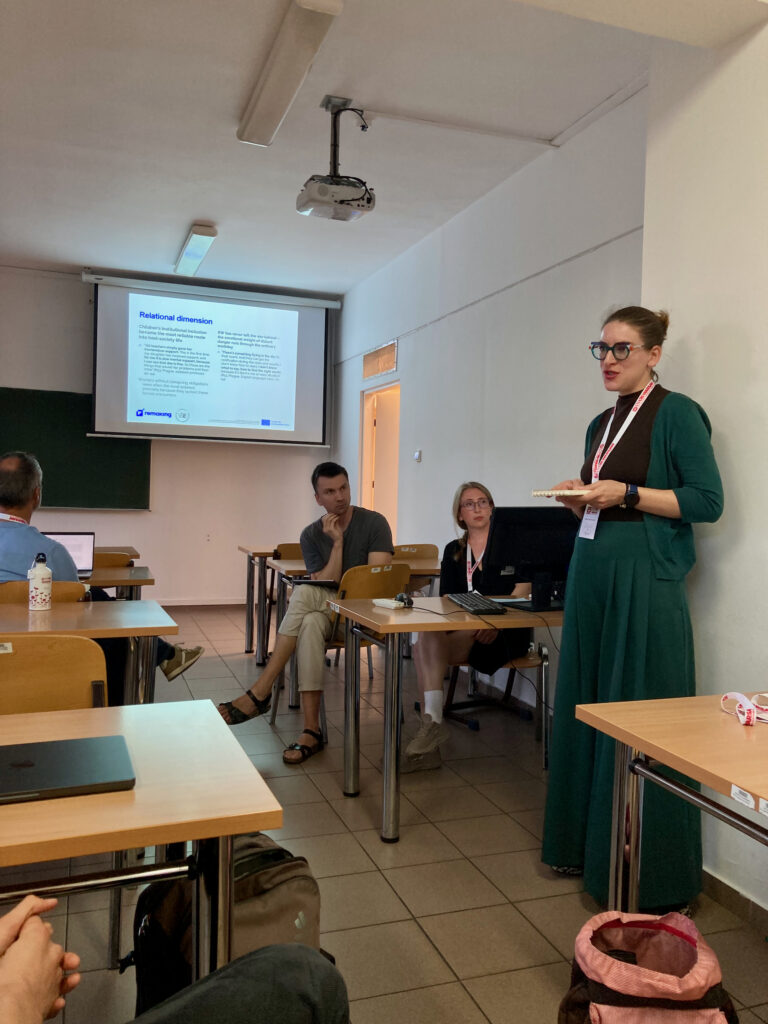
Beyond employment and institutional frameworks, the REMAKING researchers also addressed the relational dimension of displacement and integration. Their findings showed how everyday connections with the host society can differ substantially depending on people’s family circumstances and social networks. For displaced Ukrainians with children, schools and other institutions can become important points of contact with the surrounding community, creating regular interaction with teachers, parents and local institutions.
By contrast, people without caregiving responsibilities may have fewer of these structured opportunities for interaction and can therefore experience greater social isolation. The research also underlined that remote work and physical relocation do not necessarily weaken ties with Ukraine. Personal relationships, responsibilities and the emotional consequences of displacement continue to shape everyday life and working experiences across borders.
These findings connect directly with one of REMAKING’s central areas of research: understanding how remote working interacts with forced migration, mobility, employment, inequalities and belonging. The project’s enforced migration case study investigates the experiences of displaced Ukrainians and examines how remote working can enable people to maintain professional and social connections while simultaneously creating new challenges related to integration, welfare systems, care responsibilities and transnational lives.
Participation in ESA 2026 therefore represented another step in disseminating REMAKING’s results within international academic networks and contributing empirical evidence to broader discussions about how contemporary transformations in work and mobility are reshaping European societies.