International Scholars Examine the Future of Remote Work at REMAKING Seminar
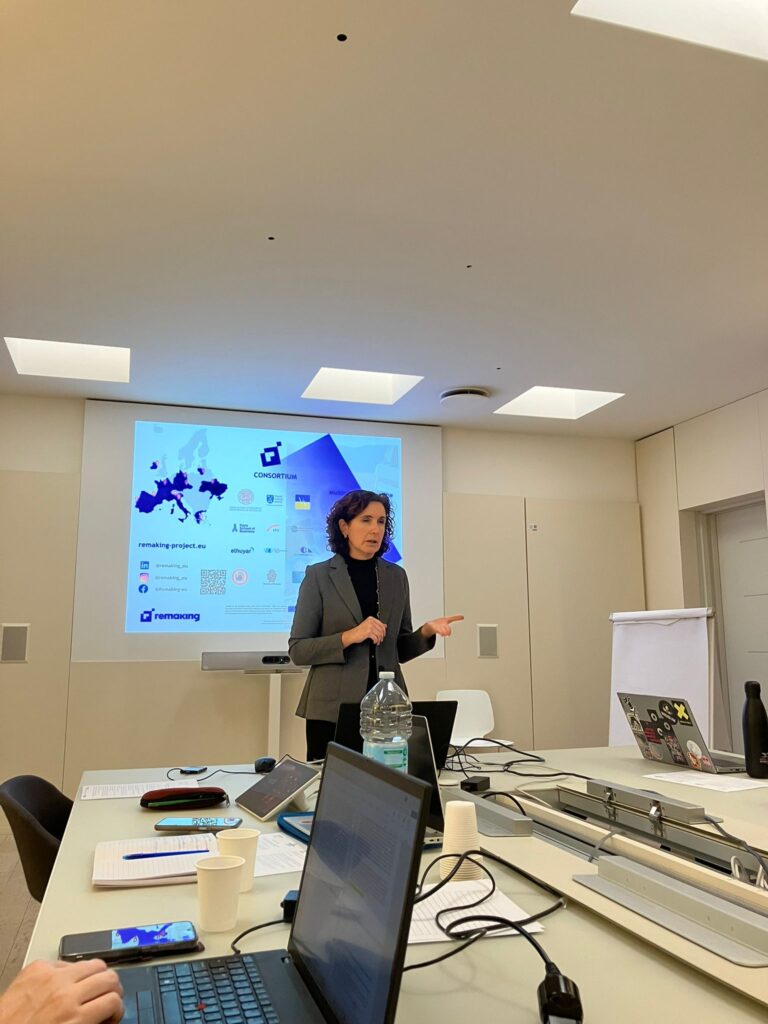
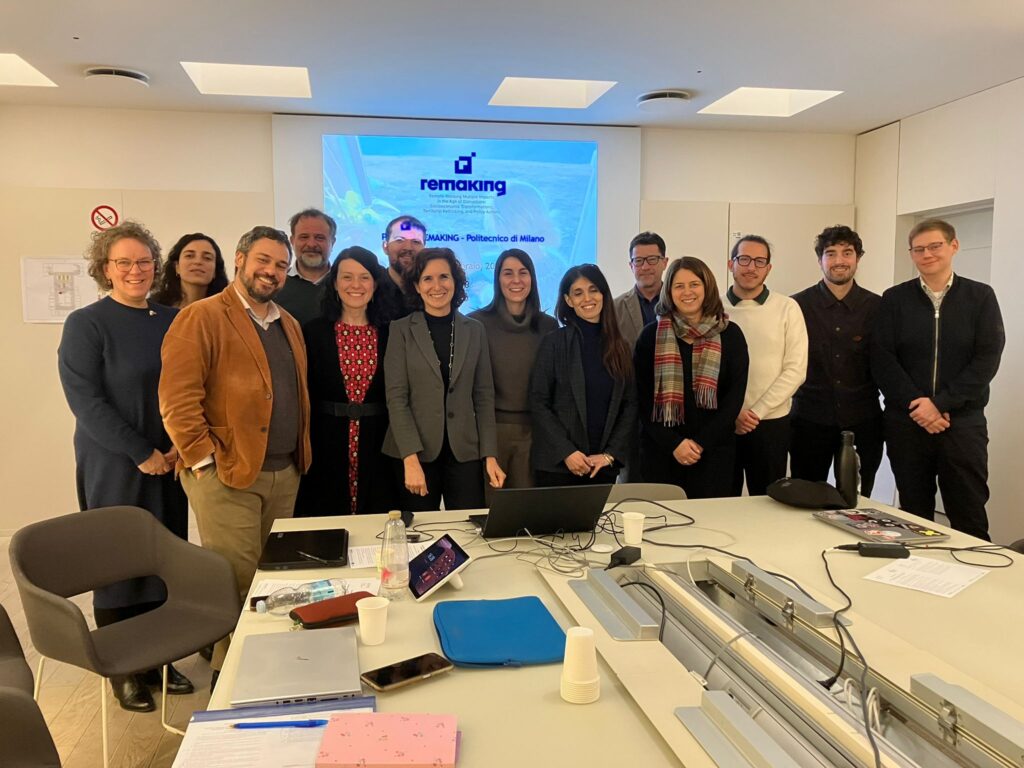
Leading international researchers gathered yesterday at the REMAKING Seminar “Remote working arrangements and their effects on individuals, organisations and territories” at DAStU Politecnico di Milano to explore how remote and hybrid working are transforming individuals, organisations, and territories.
Each study was presented in a 20-minute session followed by a 10-minute discussion led by an invited scholar, encouraging lively debate and cross-disciplinary exchange throughout the day.
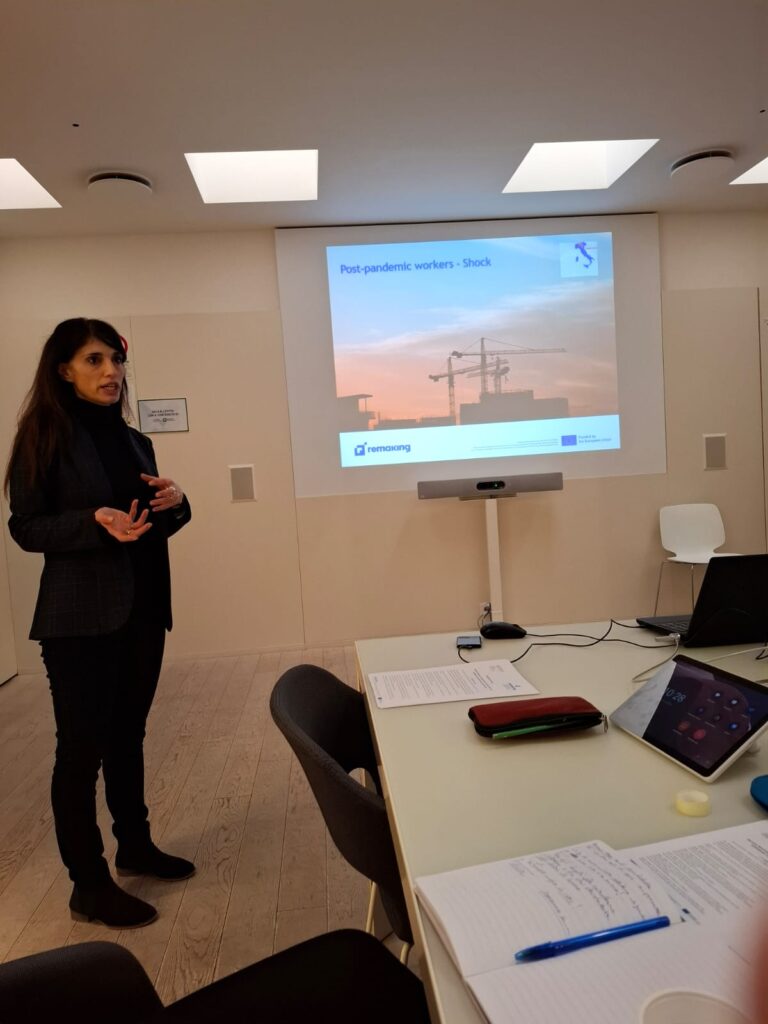
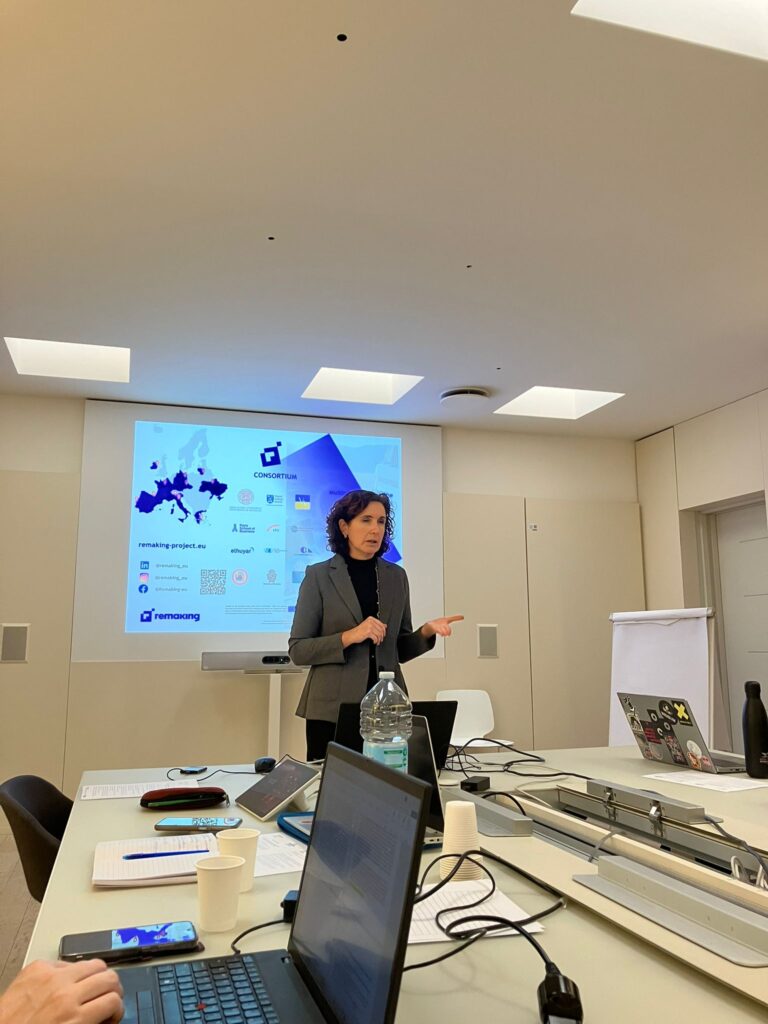
The seminar opened with welcome remarks from Carolina Pacchi, Head of the DAStU Department at Politecnico di Milano. Patrizia Leone (University of Bologna) and Ilaria Mariotti (Politecnico di Milano) then introduced the REMAKING project and its research goals.
Cities, Well-Being and Spatial Change
The morning sessions highlighted how remote work is reshaping cities and daily life. Shauna Brail (University of Toronto) examined how remote and hybrid work are influencing the future of Canadian cities, with discussion led by Ilaria Mariotti.
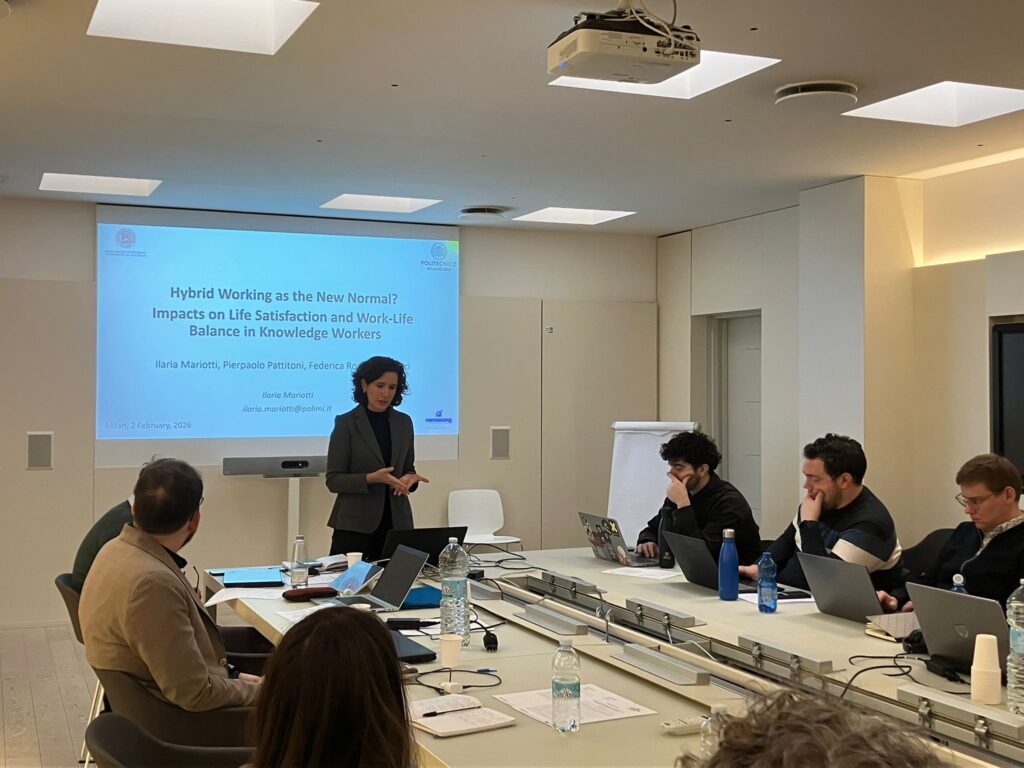
Research on quality of life followed, as Laura Vici, Pierpaolo Pattitoni, Ilaria Mariotti, and Federica Rossi analysed whether hybrid working has become the “new normal” and how it affects life satisfaction and work–life balance among knowledge workers. Aleid Brouwer (University of Groningen) led the discussion.
Housing and mobility trends were also central themes. Paolo Veneri (GSSI) presented findings on spatial changes in housing demand linked to the rise of remote work, discussed by Fabrizio Montanari (Unimore).
Later, Vicente Royuela (University of Barcelona), Luca Alfieri, Ilaria Mariotti, and Federica Rossi explored how flexible working arrangements influence residential choices and mobility patterns across Europe, with discussion by Dimitris Manoukas (Politecnico di Milano).
The morning concluded with Vincenzo Alfano, Ilaria Mariotti, and Federica Rossi presenting an analysis of European pandemic-era data to understand how hybrid working shapes life satisfaction. The discussion was led by Carles Mendez Ortega (Universitat Oberta de Catalunya).
Economic Activity and Regional Adoption
Afternoon presentations focused on economic and regional dimensions. Federica Rossi, Tommaso Cigognetti, Dimitris Manoukas, and Martin Hulényi shared Italian evidence on the relationship between e-commerce growth and working from home, followed by discussion led by Oliver Rafaj (University of Bratislava).
Giuseppe Croce and Alessia Matano (Sapienza University of Rome) presented research on the drivers of remote work adoption across European regions, with discussion by Federica Rossi.
The role of physical workspace was examined by Alessandra Migliore, Chiara Tagliaro, and Cristina Rossi Lamastra (Politecnico di Milano), who discussed whether workspace design affects where academics conduct their research. Their session was discussed by Vincenzo Alfano.
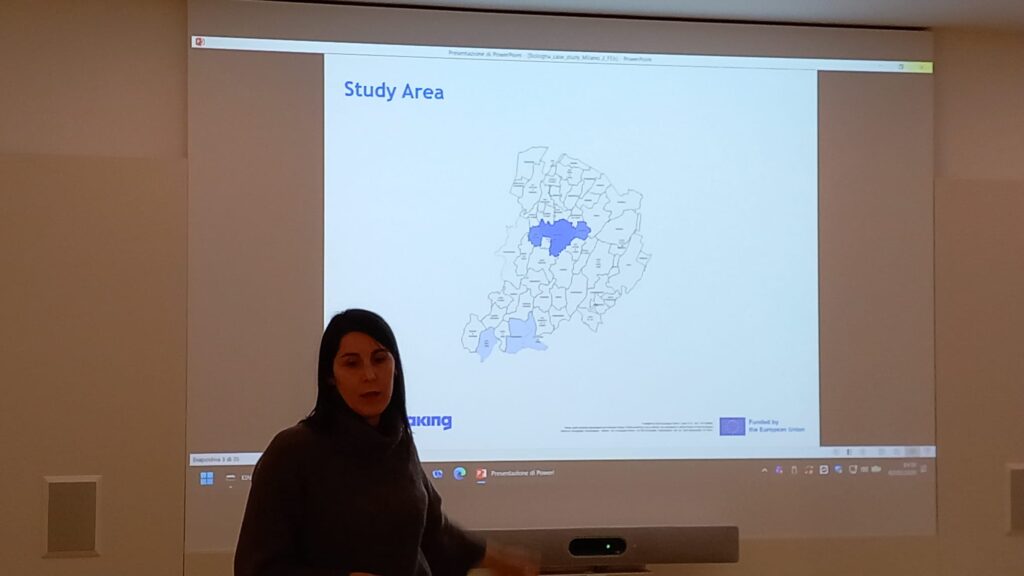
Closing the seminar, Patrizia Leone, Elena Prodi, and Marco R. Di Tommaso presented a metropolitan case study on the socio-economic trajectories linked to remote working in the Bologna area. Stefania Fiorentino (University of Cambridge) led the final discussion of the day.