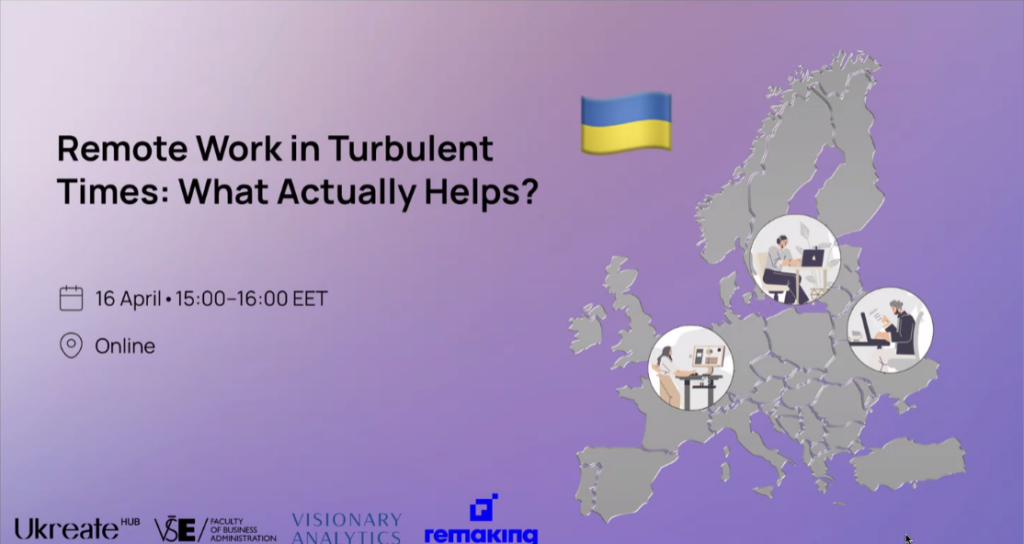
REMAKING Case Study Webinar Highlights Remote Work Realities for Displaced Ukrainians
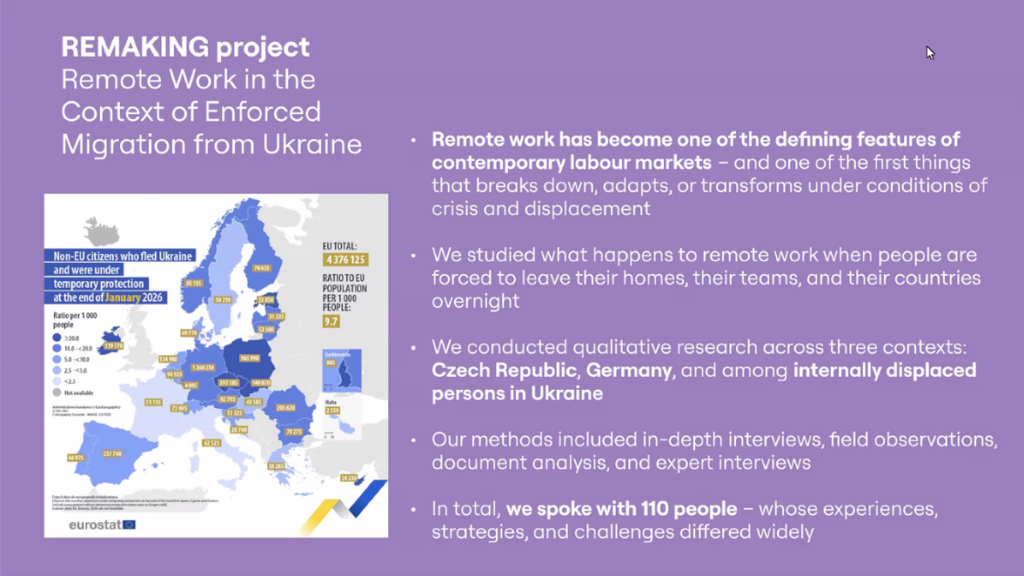
An online workshop held on April 16 brought attention to the complex realities of remote work among displaced Ukrainians across Europe. The event was organized by the Prague University of Economics and Business and Visionary Analytics, in partnership with Ukreate Hub, and formed part of the REMAKING project’s case study on enforced migration workers.
Targeted at Ukrainian remote workers in Lithuania and across the EU, the webinar created a reflective space for participants to explore professional development pathways while addressing the growing issue of isolation in remote work. The session was facilitated by researchers including Karolina Kania from VSE, and colleagues involved in the REMAKING project, with contributions drawing on collaborative research conducted with the Leibniz Institute for Research on Society and Space (IRS) and Taras Shevchenko National University of Kyiv.
The discussion highlighted that while remote work has enabled many displaced Ukrainians to maintain employment and stay connected with employers and clients, it also presents significant challenges. Speakers emphasized that remote work in the context of forced displacement is often a necessity rather than a choice, shaped by limited access to local labor markets and disrupted career trajectories.
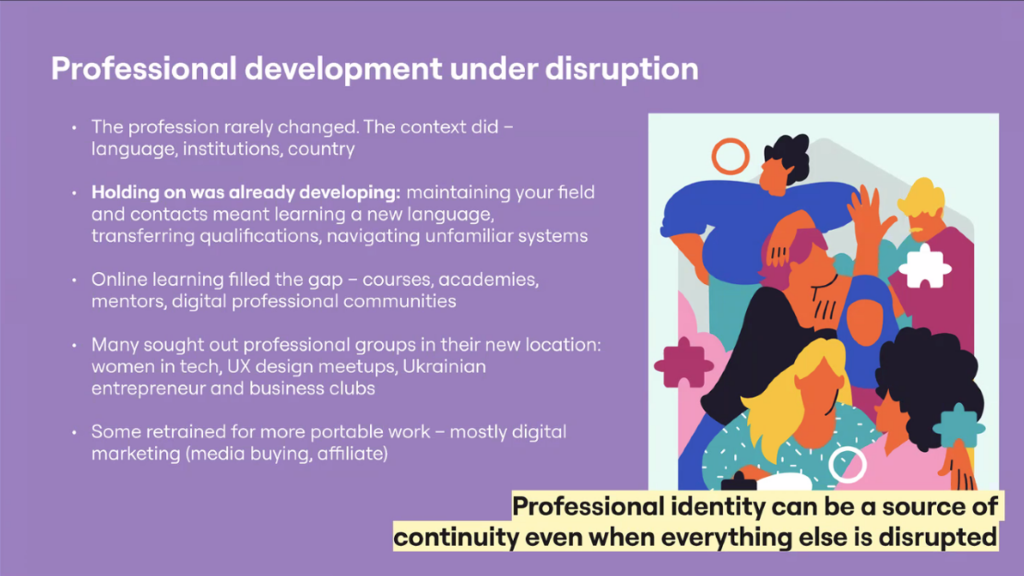
Participants explored how professional development under these conditions differs from traditional career growth. Rather than promotions or upward mobility, development often involves adapting skills to new environments, learning languages, navigating administrative systems, and maintaining professional identity despite instability.
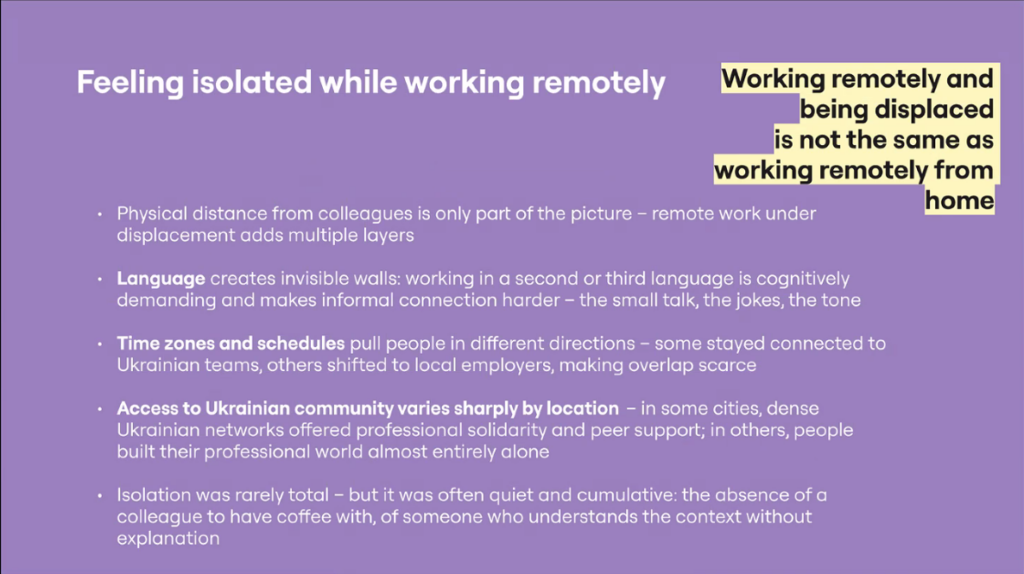
Isolation emerged as a central theme. Language barriers, cultural differences, and the absence of strong local networks can intensify feelings of disconnection, even for those who are professionally active. The webinar underscored the importance of support systems—both formal and informal—in helping remote workers sustain motivation, well-being, and career progression.
Organizers noted that the insights gathered during the session will contribute to ongoing research within the REMAKING project, which examines how remote work is reshaping labor conditions, regional development, and policy responses in the context of enforced migration.
By combining research findings with lived experiences, the workshop aimed to inform both policymakers and support organizations, while offering participants tools to better navigate the challenges of working remotely under displacement.