REMAKING, WinWin4WorkLife and R-MAP hold joint European symposium on remote work
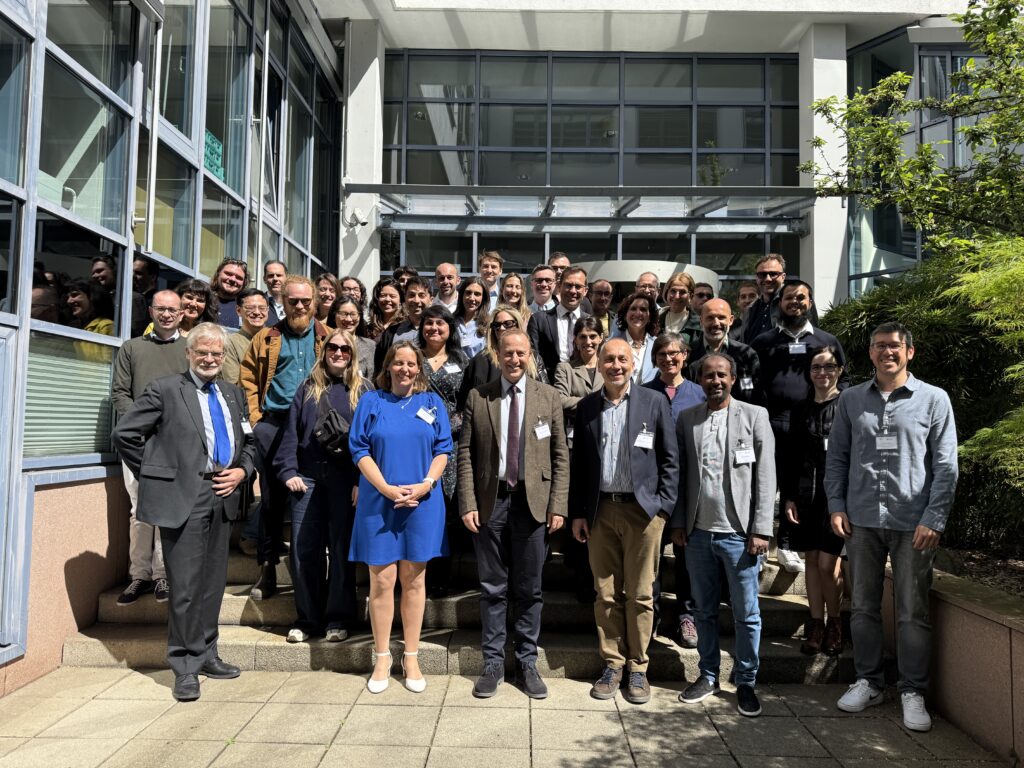
On 22 April 2026, the REMAKING project co-hosted the joint symposium “Remote Work in Europe: Evidence, Impacts, Policy” together with its sister projects, WinWin4WorkLife and R-MAP. The event took place at the ZEW – Leibniz Centre for European Economic Research in Mannheim and gathered participants in a hybrid format to discuss mid-term findings on the societal, economic, and spatial impacts of remote work across Europe.
The symposium highlighted the complementarities between the three projects, with opening contributions from Veronique Van Acker (WinWin4WorkLife. Luxembourg Institute of Socio-Economic Research: LISER), Marco R. Di Tommaso (REMAKING. University of Bologna), and Stratos Stylianidis (R-MAP. Aristotle University of Thessaloniki), who presented the state of play of each initiative and outlined a shared research agenda.
Across the day, presentations provided a detailed and nuanced picture of remote work dynamics. Olle Järv (WW4WL. University of Helsinki) introduced a shared conceptual framework linking employer and employee perspectives to wider social, economic, and spatial outcomes, supported by a harmonised lexicon and systematic literature review. Building on this, Karin Pfeffer (R-Map. University of Twente) and Christos Politis (Q-PLAN International) presented the co-created R-MAP model, designed to map causal relationships and feedback loops shaping remote work impacts, illustrated through several European use cases. From the REMAKING project, Žilvinas Martinaitis (REMAKING. Visionary Analytics) showed that remote work trajectories across Europe are likely to remain heterogeneous, depending on sectoral composition, institutional frameworks, and technological adoption.
Employer perspectives highlighted how organisations are adapting to remote and hybrid work. Ludivine Martin (WW4WL. LISER), Vicky Bempi (WW4WL.Prolepsis Institute), and Andreas Jespersen (WW4WL. DCHE) presented preliminary findings showing how firms balance productivity gains with concerns about employee well-being, mental health, and creativity, with differentiated effects across sectors. Sarra Ben Yahmed (WW4WL. University of East Anglia / ZEW) demonstrated, through experimental evidence, how the expansion of hybrid work affects wage-setting, with variations linked to candidate characteristics and employer perceptions. Fesseha Belay (WW4W.LIST-ID) showed that remote work may reduce firms’ reliance on centralised locations, influencing relocation intentions and enabling more distributed organisational models. Giulio Buciuni (REMAKING. Trinity College Dublin) further illustrated how remote knowledge-intensive work can reshape innovation ecosystems and create opportunities for second-tier and peripheral regions.
Employee-focused contributions emphasised lived experiences and inequalities. Ludivine Martin presented survey evidence highlighting impacts on well-being, work–life balance, and cross-border working arrangements, particularly in integrated labour markets such as Luxembourg. Sibel Kiran (R-Map. Koç University) and Christos Politis showed how remote work reshapes housing choices, daily routines, and social dynamics, while also intersecting with broader health and well-being dimensions. Suntje Schmidt (REMAKING. Leibniz Institute for Regional Geography) underlined the diversity of remote work arrangements and their uneven effects, combining greater flexibility with challenges such as work intensification, isolation, and boundary management, based on qualitative case studies.
Territorial and environmental dimensions were also central to the discussions. Qin Zhang and Wei-Chieh Huang (WW4WL. Technical University of Munich) presented modelling approaches showing how teleworking scenarios can significantly alter travel behaviour, with implications for congestion, emissions, and public health, depending on behavioural adaptations and rebound effects. Patrizia Leone (REMAKING. University of Bologna) shared results from a large-scale survey from REMAKING of more than 14,000 respondents across six EU countries, indicating that remote work may contribute to a rebalancing between metropolitan and non-metropolitan areas, albeit unevenly across contexts. Panagiotis Papanikolaou (R-Map. ARXNET) presented an interactive visualisation platform that maps regional patterns and supports comparative, evidence-based analysis.
The final discussions translated these findings into policy-relevant insights. Veronique Van Acker (LISER) outlined preliminary recommendations based on systematic evidence, including strengthening EU directives on the right to disconnect and mental health, and improving equitable access to remote work through investments in infrastructure and skills. José Manuel Ferreira (METREX) presented the first R-MAP policy brief and its future directions, while Ilaria Mariotti (REMAKING. Politecnico di Milano) discussed the diversity of regulatory frameworks for remote work across EU Member States. Tiago Santos Pereira (REMAKING. CoLABOR) highlighted converging insights and opportunities for coordinated policy action, and Žilvinas Martinaitis led a discussion on strengthening synergies in communicating findings to policymakers.
Overall, the symposium marked an important milestone in consolidating interdisciplinary evidence on remote work in Europe and reinforcing collaboration between REMAKING and its sister projects, contributing to a stronger foundation for future policy development.
Share on Facebook Share on Twitter Share on Pinterest