Anna Oechslen explores remote work, migration and displaced futures during research stay at the University of Edinburgh
Anna Oechslen, researcher at The Leibniz Institute for Research on Society and Space (IRS) and partner in the REMAKING project, spent January to April as a visiting researcher at the Institute for Advanced Studies in the Humanities (IASH), part of the University of Edinburgh.
During her stay, Anna developed a research project closely connected to REMAKING, entitled “Futures of Digital Work and Migration. An Examination of Overlapping Timespaces of Everyday Practice.” The project builds on interviews conducted within REMAKING’s research on displaced people and remote work, focusing particularly on Ukrainian knowledge workers who fled Russia’s invasion of Ukraine and continued working remotely, often across national borders.
Her work examines how remote digital work practices interact with migration experiences, national labour markets and future expectations. As displacement continues, remote work can offer continuity and flexibility, but it can also create tensions with long-term integration, labour rights, migration regimes and people’s sense of belonging.
While in Edinburgh, Anna shared and further developed these REMAKING-related insights through several academic activities. On 9 March, she co-organised a roundtable discussion on “Remote work and (im)mobility: politics, practices, and imaginaries”, together with Fabiola Mancinelli from the Universitat de Barcelona. The event brought together perspectives on digital nomads, displaced people working remotely and legal frameworks, exploring how remote work is reshaping mobility, livelihoods and territorial boundaries.
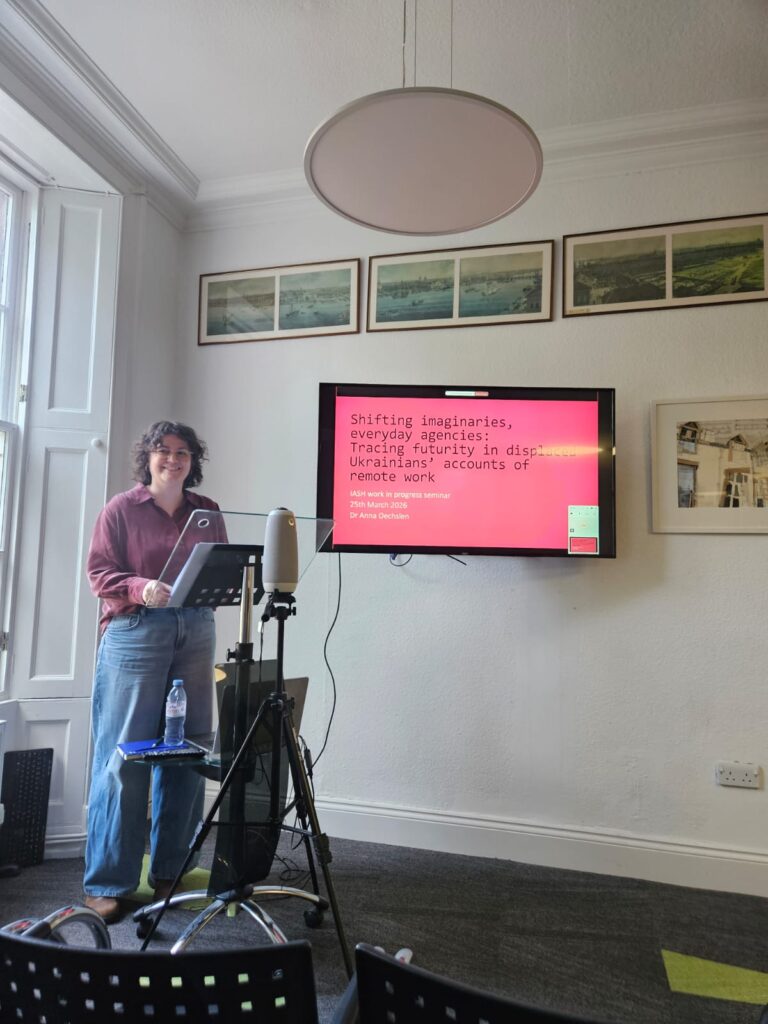
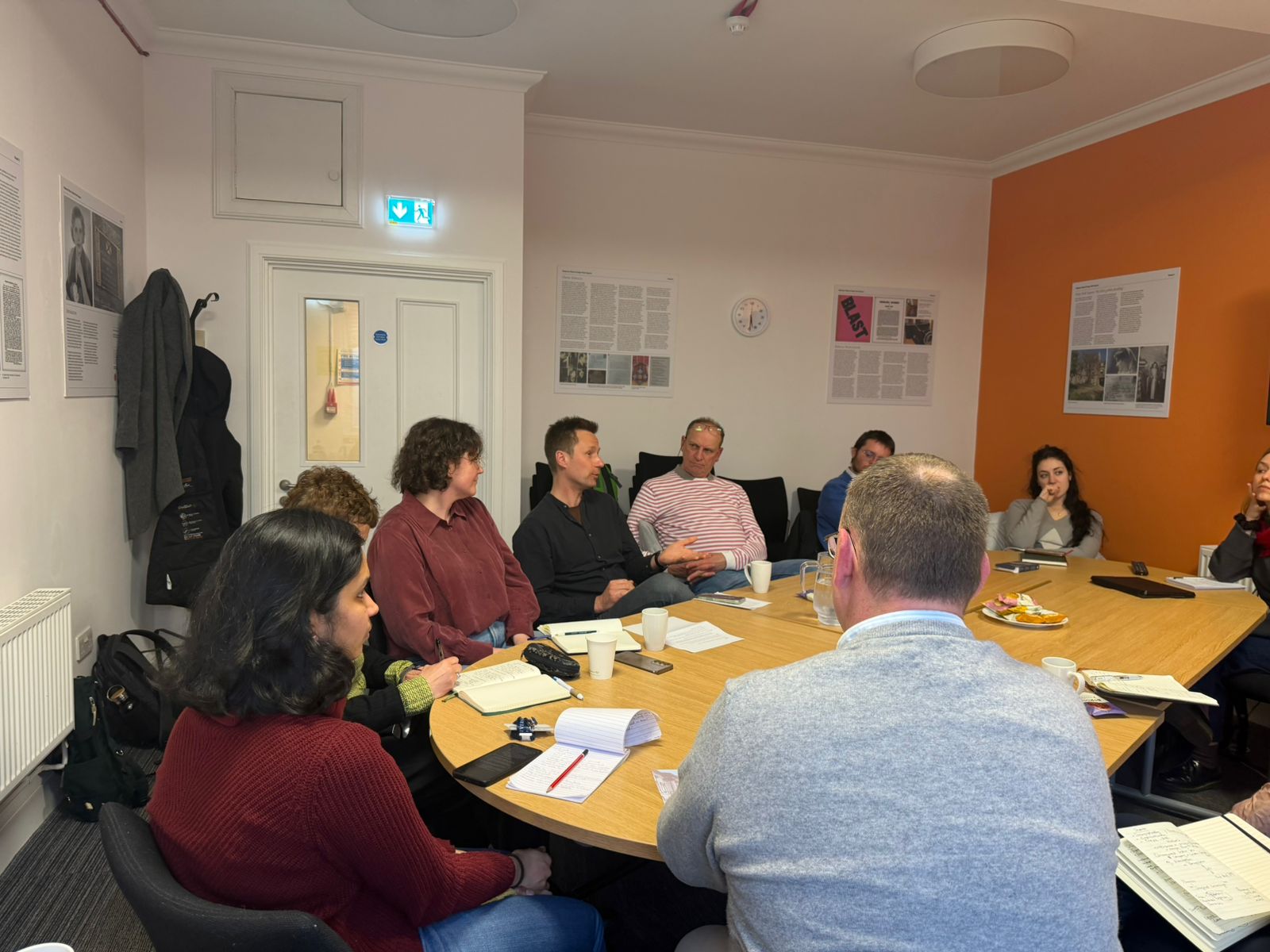
On 25 March, Anna also presented her research in a work-in-progress seminar at IASH, titled “Shifting imaginaries, everyday agencies: Tracing futurity in displaced Ukrainians’ accounts of remote work.” The seminar focused on how displaced Ukrainians imagine and actively construct futures in situations of uncertainty, and on the ambiguous role that remote work can play in these processes.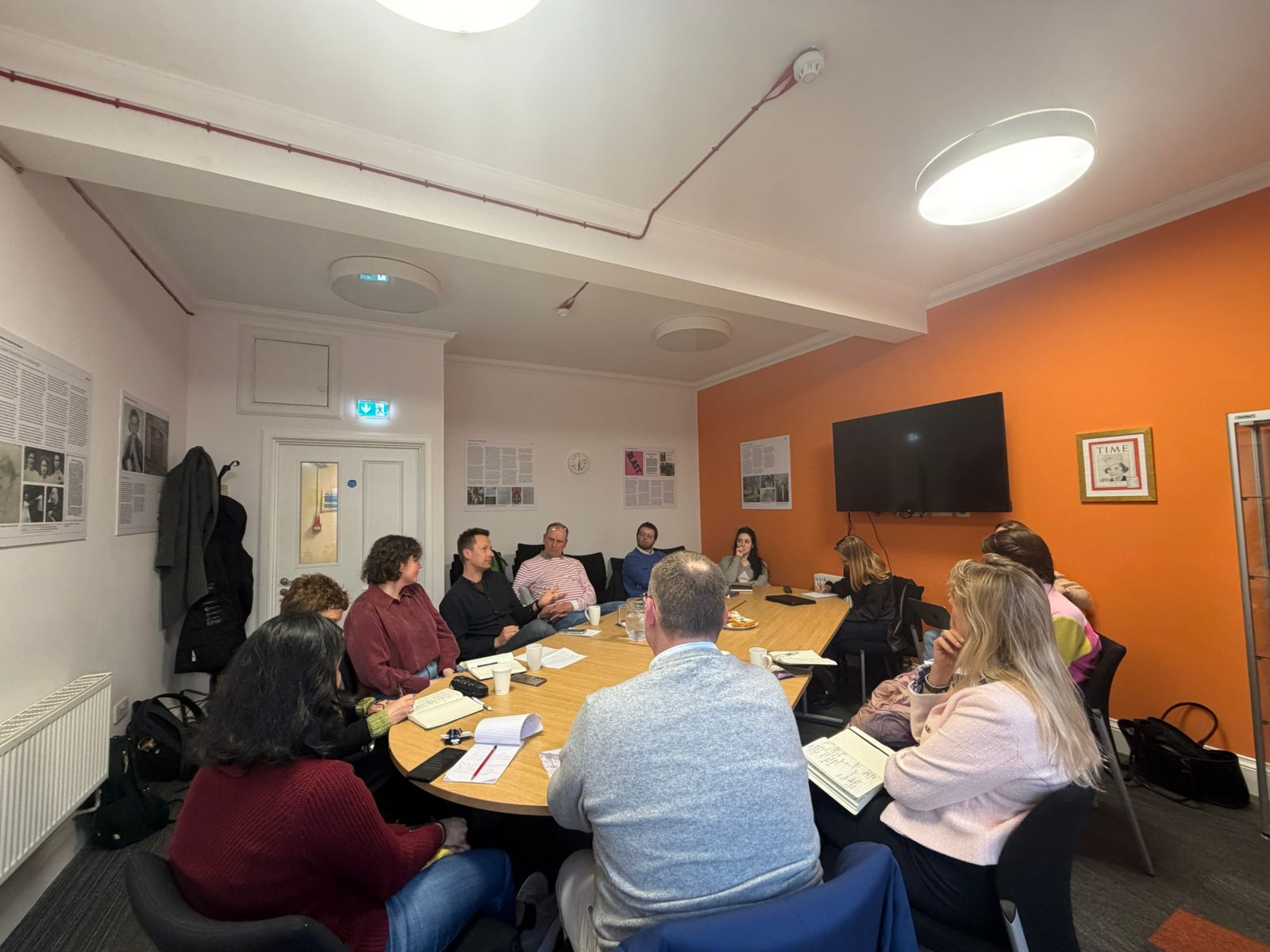
These activities contribute directly to REMAKING’s broader aim of understanding how remote work is transforming people’s lives, territories and labour practices across Europe. By connecting digital work, migration and future orientations, Anna’s research strengthens the project’s reflections on the social and spatial consequences of remote work, especially in contexts marked by displacement, uncertainty and cross-border mobility.
Share on Facebook Share on Twitter Share on Pinterest