REMAKING explores remote working challenges for displaced Ukrainians at Hamburg Policy Workshop
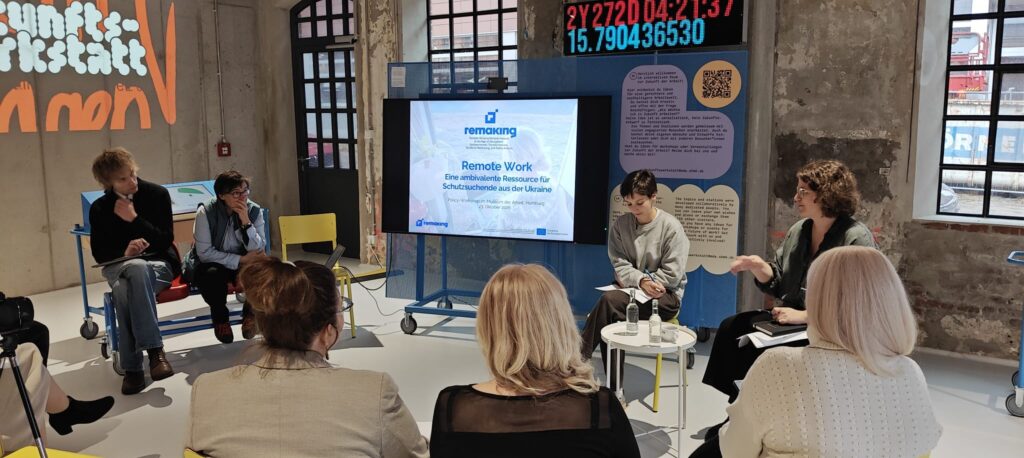
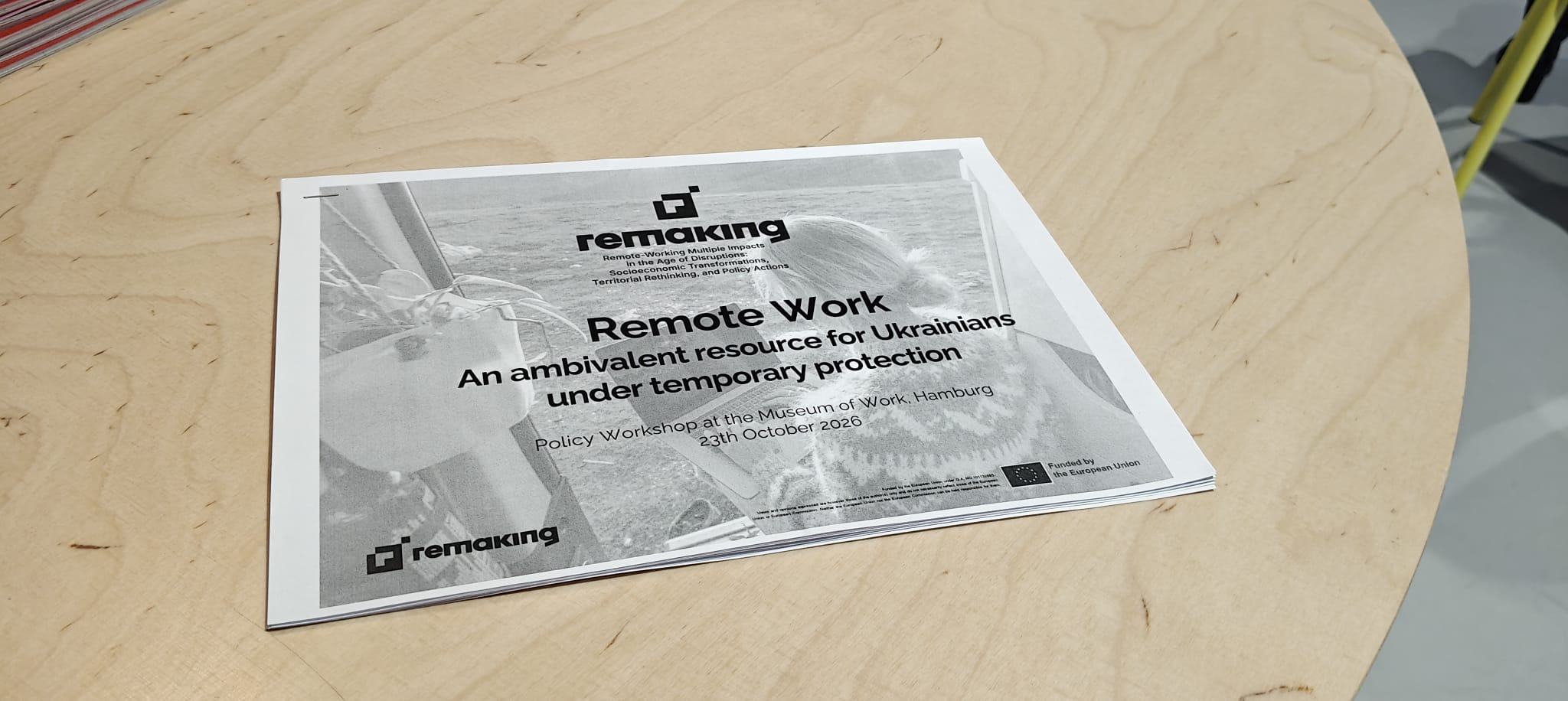
On 23 October 2026, the REMAKING project held a Policy Workshop at the Museum of Work in Hamburg, Germany, focusing on the opportunities and challenges of remote working for Ukrainians under temporary protection. Entitled “Remote Work – an Ambivalent Resource for Ukrainians under Temporary Protection”, the event brought together researchers and stakeholders to discuss research findings and explore policy approaches to supporting displaced workers.
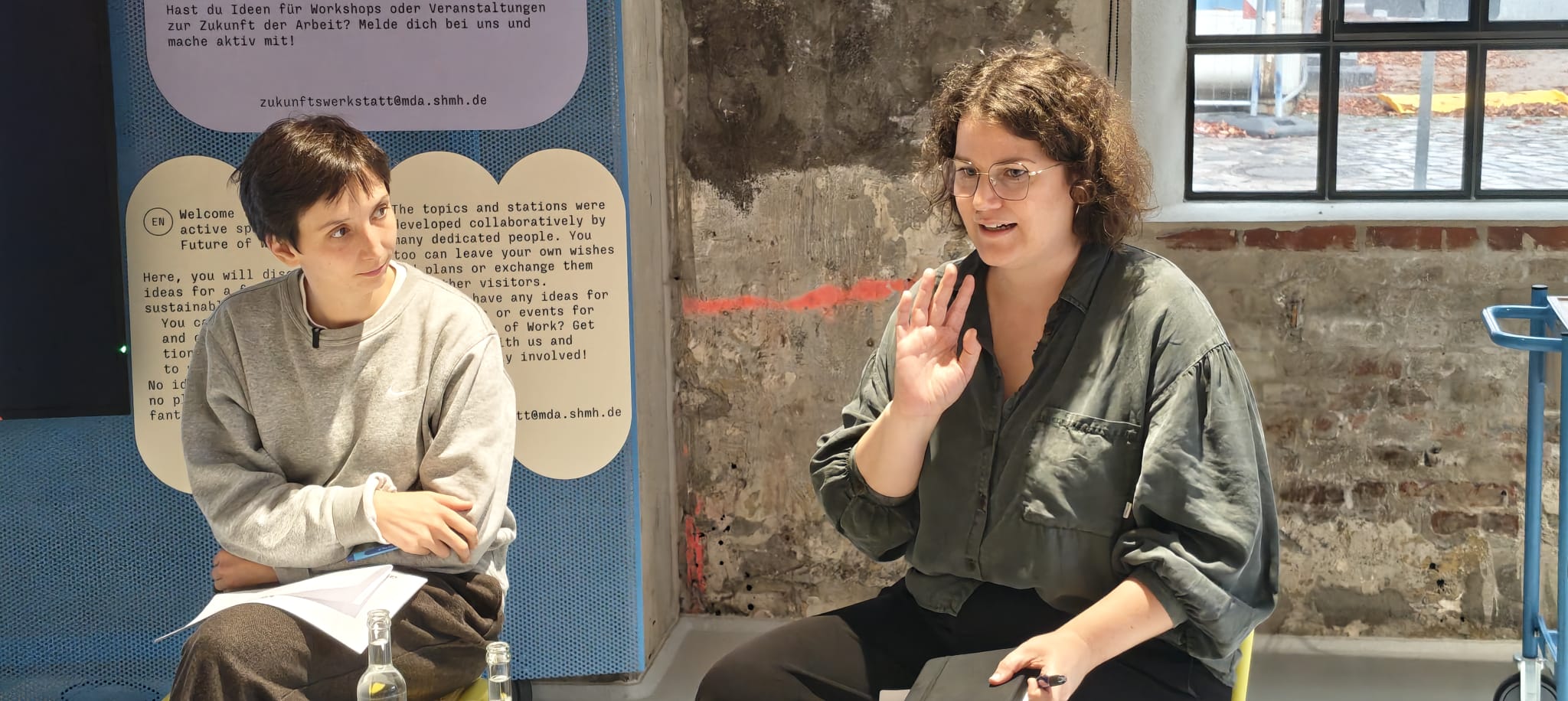 The workshop featured a presentation of REMAKING’s research findings on Ukrainians under temporary protection working remotely, with Luisa Hahn, from the Museum of Work, moderating a conversation with Anna Oechslen, from the Leibniz Institute for Research on Society and Space (IRS). The discussion focused on the
 complex role of remote working in the experiences of displaced Ukrainians, considering both its potential benefits and the challenges it presents.
The programme also included a presentation of REMAKING’s Policy Toolbox, exploring how remote working can be shaped through public policies and how research findings can inform policy development.
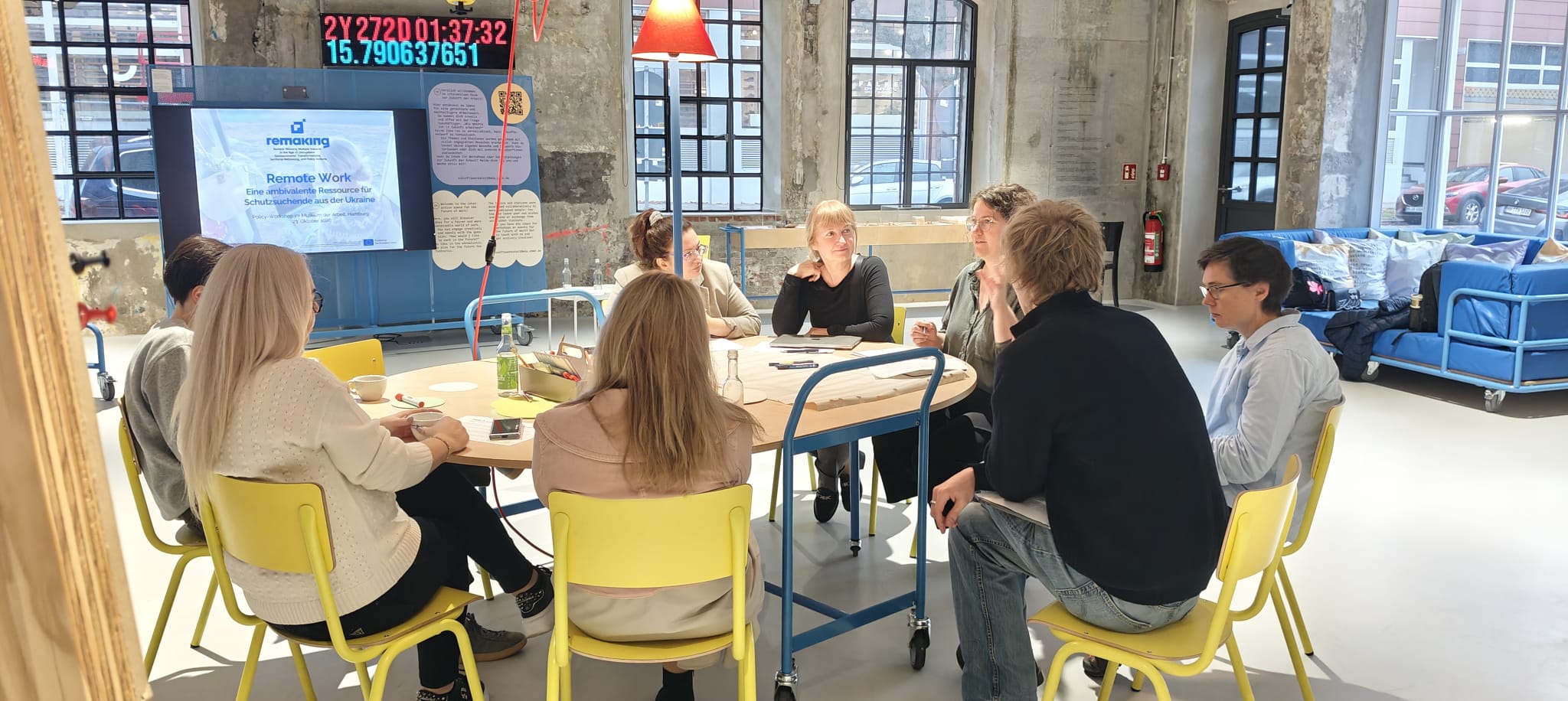
A central part of the event was dedicated to an interactive World Café, where participants engaged in smaller group discussions addressing four key areas:
- Workers’ rights, including the right to disconnect.
- Combining paid work and care responsibilities, examining the challenges of balancing professional and family obligations.
- Working infrastructure, including access to suitable workplaces and necessary equipment.
- Integration, considering the role of remote working in the social and professional integration of displaced Ukrainians.
 Following the group discussions, participants shared their main takeaways in a plenary session, providing an opportunity for further exchange on policy priorities and potential next steps.
The Hamburg workshop contributed to REMAKING’s ongoing efforts to develop evidence-based policy recommendations addressing the socioeconomic implications of remote working across Europe. By focusing on Ukrainians under temporary protection, the event emphasised the importance of considering the diverse circumstances and needs of remote workers when designing inclusive and effective policies.
Share on Facebook Share on Twitter Share on Pinterest