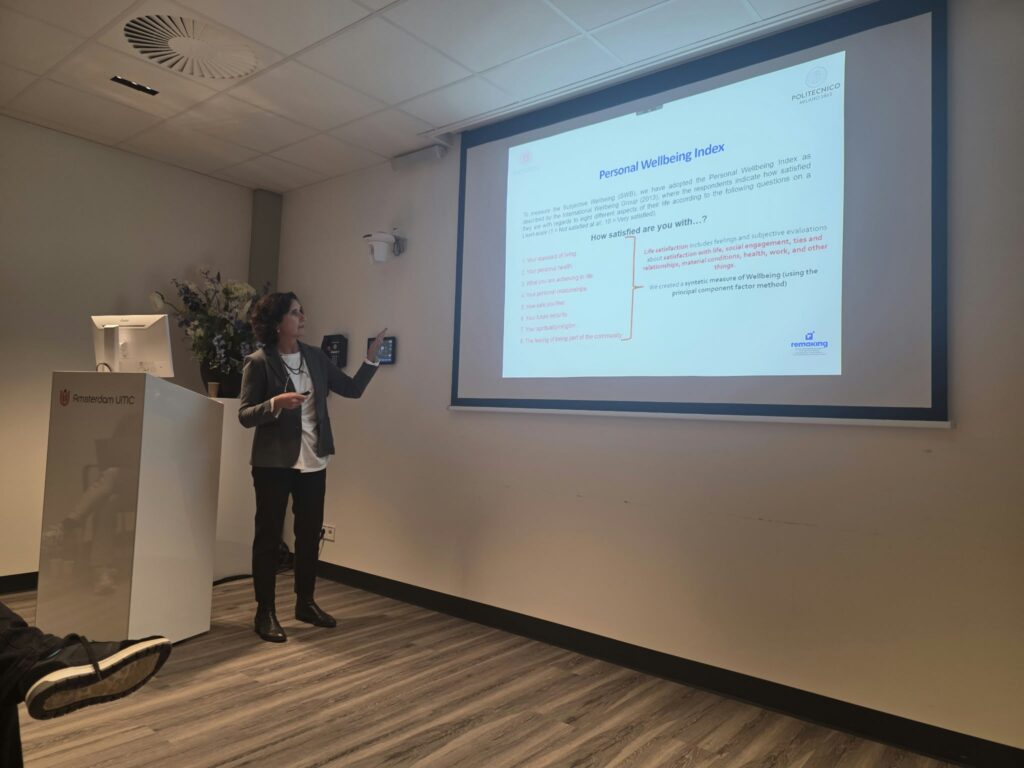
REMAKING explores hybrid work and wellbeing in Amsterdam
On 9 October 2026, REMAKING researcher Ilaria Mariotti, from Politecnico di Milano, participated in the first meeting of the European Occupational Health Researchers Network in Amsterdam, presenting research on the relationship between hybrid working intensity and subjective wellbeing, based on data collected within the REMAKING project.
The event, organised by the Society of Occupational Medicine (SOM), took place at Amsterdam University Medical Center (Amsterdam UMC), bringing together researchers and professionals from across Europe working in occupational health, workplace wellbeing and related interdisciplinary fields.
The meeting aimed to strengthen European collaboration, research capacity and knowledge exchange, while exploring opportunities for joint research initiatives and closer dialogue with European stakeholders and organisations involved in occupational health and employment-related policies.
Exploring the relationship between hybrid work and wellbeing
During the meeting, Ilaria Mariott presented the paper “Too Much of a Good Thing? Evidence on Hybrid Working Intensity and Subjective Wellbeing in Europe.”
Co-authored with Pierpaolo Pattitoni and Laura Vici from the University of Bologna and Federica Rossi from Politecnico di Milano, the study draws on data collected through the REMAKING project to investigate how the intensity of hybrid working influences the subjective wellbeing of European knowledge workers.
The research addresses an increasingly relevant question as hybrid working arrangements become more established across Europe: does working remotely more frequently always lead to greater wellbeing?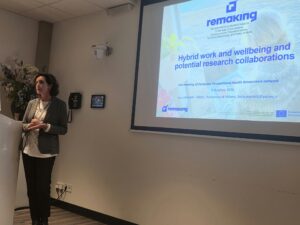
The findings suggest a more nuanced relationship. Regression results reveal an inverted U-shaped relationship between hybrid working intensity and subjective wellbeing. Initially, wellbeing increases as the amount of remote work rises. However, these benefits gradually diminish and may eventually become negative at higher levels of remote working intensity.
These results contribute to the ongoing debate on the benefits and limitations of flexible working arrangements, highlighting the importance of finding an appropriate balance between remote and office-based work.
Connecting REMAKING research with European occupational health priorities
Mariotti’s presentation formed part of a programme addressing occupational health research priorities, European collaboration opportunities and emerging workplace challenges.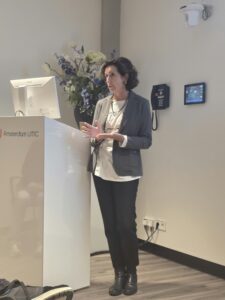
The meeting also featured contributions from researchers and organisations working on evidence-based occupational health practices, workplace health services and psychosocial risks.
REMAKING’s participation provided an opportunity to share project findings with the European occupational health research community and contribute to discussions on how emerging working arrangements influence workers’ wellbeing.
Share on Facebook Share on Twitter Share on Pinterest