REMAKING findings featured by the Leibniz Transformation Lab
Findings from the REMAKING case study on enforced remote workers have been featured on the blog of the Leibniz Lab “Disruptions and Transformations” in an article written by Anna Oechslen from the Leibniz Institute for Research on Society and Space (IRS).
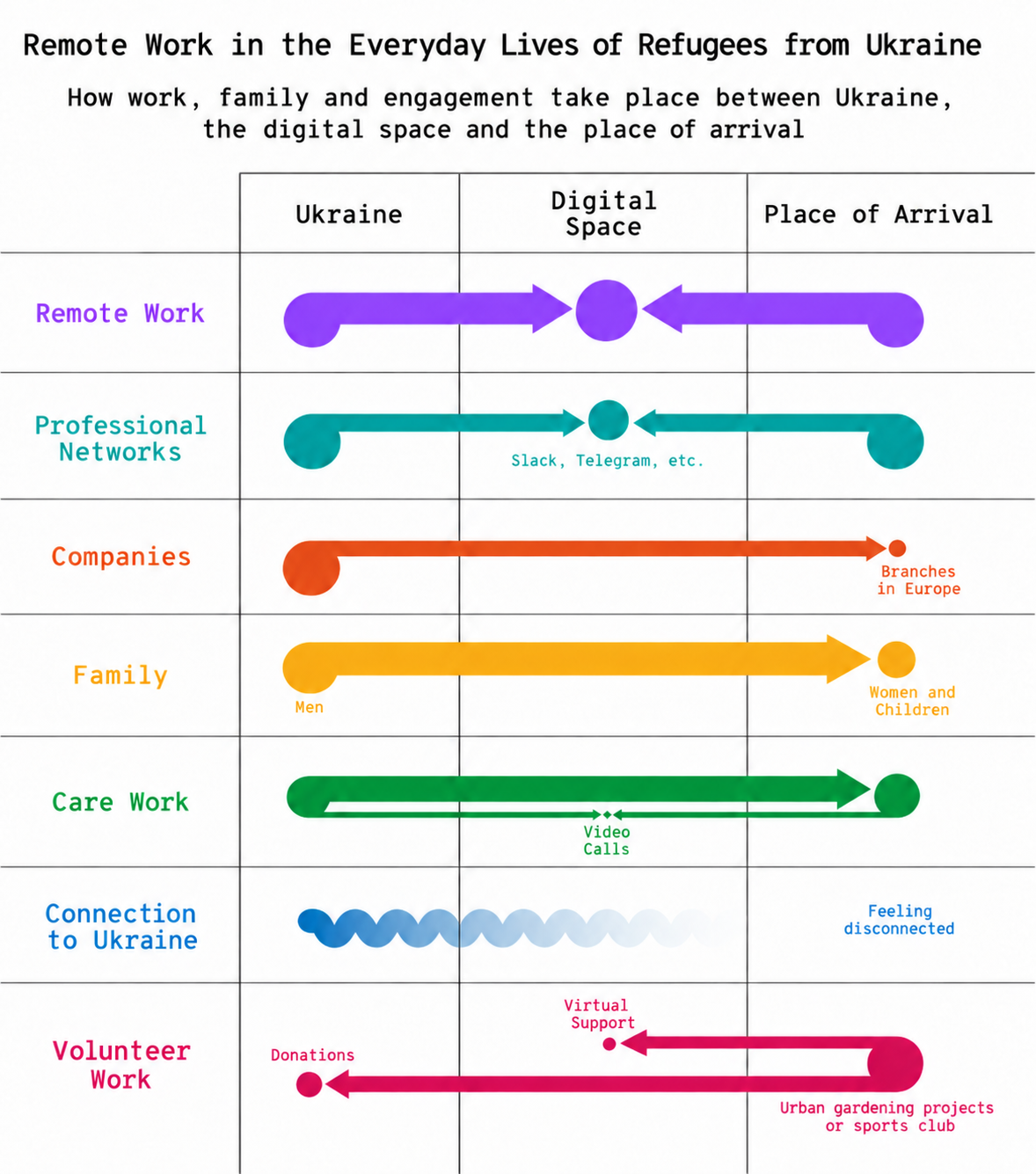
The article looks at how remote work has become an important way for displaced Ukrainians to maintain connections with their previous lives in Ukraine. For many, continuing to work remotely has made it possible to stay in contact with colleagues, employers and professional networks across Ukraine and other European countries. In some cases, international freelance work has also offered an alternative when language barriers and limited local networks made it difficult to find suitable employment in Germany.
At the same time, these translocal connections can make integration into the new place of residence more difficult. Working mainly from home can reduce opportunities to meet local colleagues, build new social relationships or attend language courses. As one participant described it: “I have arrived in an apartment, but not in the country.”
The article also shows that these cross-border relationships go beyond paid employment. Professional networks are increasingly maintained through digital platforms such as Slack and Telegram, while family and care responsibilities are managed across distance through video calls, messages and visits. Remote work can help make these arrangements possible, but it can also blur the boundaries between paid work and care responsibilities.
Volunteer work is another important part of this picture. Ukrainians participate in local initiatives such as urban gardening projects and sports clubs, while also supporting people in Ukraine remotely through donations and online activities.
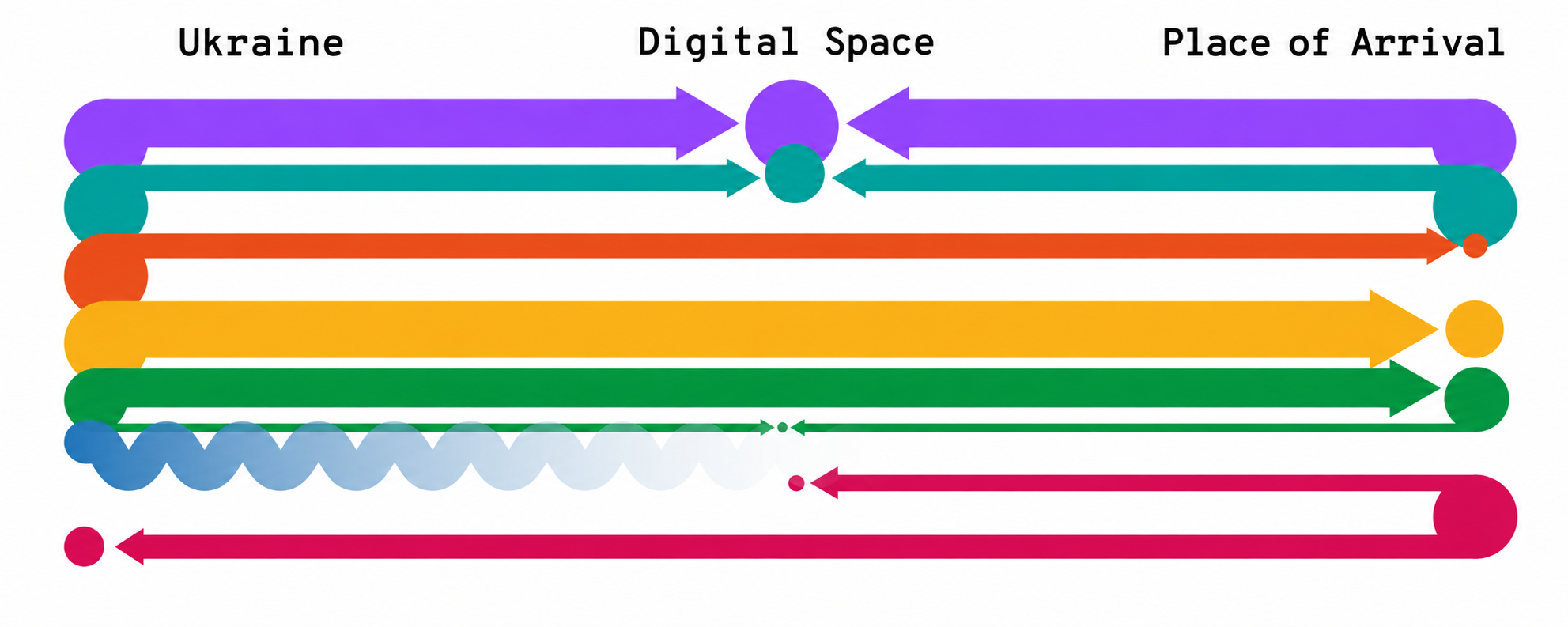
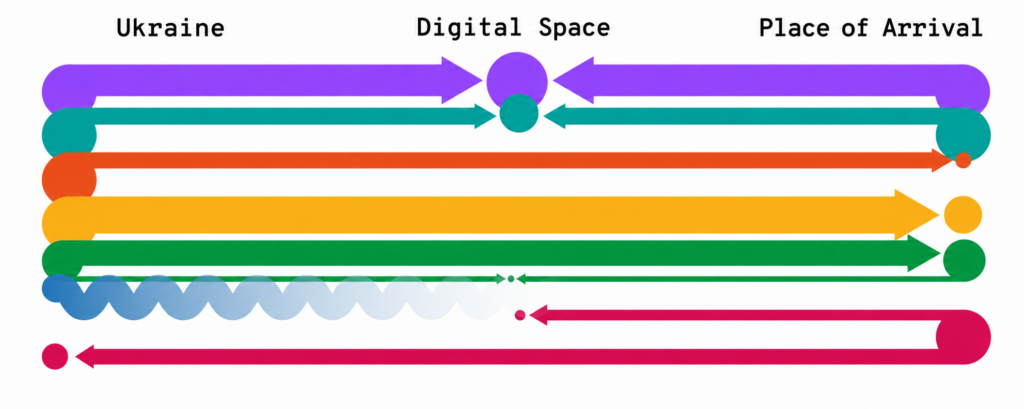
To illustrate these connections, Anna Oechslen collaborated with graphic designer Eva Leonhard on an infographic showing how remote work, professional networks, companies, family, care work, connections to Ukraine and volunteer work extend across Ukraine, the digital space and the place of arrival.
Overall, the article highlights how paid work, personal relationships, care and volunteer activities are closely interconnected and increasingly take place both locally and remotely. Remote work can help displaced Ukrainians preserve important ties across borders, while at the same time creating new challenges for building relationships in their immediate surroundings.
Read the article in english here.
Credit for the infographics: Eva Leonhard